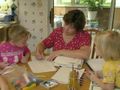
 Furthermore, traditionalists take hope from the burgeoning growth of home-schooling in our time. As recently as the 1980s, it stirred media comment when a home-schooler would gain admission to an elite university. Today, many university faculty report that their best students are usually the home-schoolers and that there are more of them each year. A cohort of well-mannered, morally serious, and intellectually curious young people is a gift to the country in its own right. But traditionalist conservatives also hope that as we absorb in our social imagination the fact of widespread home-schooling, we will begin to recognize something that was obscured by the progressive ideology of the common school—namely, that a public school is not an arrangement between the state and students but rather between the state and parents. Schools are best understood as providing one way (and not the only way) to serve, or even merely to supplement, the primarily parental office, which is simultaneously an obligation and a right, of educating one’s own children.
(Mark C. Henrie, "Understanding Traditionalist Conservatism," chap. 1 in Varieties of Conservatism in America, ed. Peter Berkowitz [Stanford, CA: Hoover Institution Press, 2004], 3-30, at 24 [italics in original])
 Keith Burgess-Jackson, J.D., Ph.D.