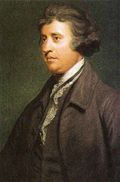
 We know, and what is better we feel inwardly, that religion is the basis of civil society, and the source of all good and of all comfort. In England we are so convinced of this, that there is no rust of superstition, with which the accumulated absurdity of the human mind might have crusted it over in the course of ages, that ninety-nine in an hundred of the people of England would not prefer to impiety. We shall never be such fools as to call in an enemy to the substance of any system to remove its corruptions, to supply its defects, or to perfect its construction. If our religious tenets should ever want a further elucidation, we shall not call on atheism to explain them. We shall not light up our temple from that unhallowed fire. It will be illuminated with other lights. It will be perfumed with other incense, than the infectious stuff which is imported by the smugglers of adulterated metaphysics. If our ecclesiastical establishment should want a revision, it is not avarice or rapacity, public or private, that we shall employ for the audit, or receipt, or application of its consecrated revenue.—Violently condemning neither the Greek nor the Armenian, nor, since heats are subsided, the Roman system of religion, we prefer the Protestant; not because we think it has less of the Christian religion in it, but because, in our judgment, it has more. We are protestants, not from indifference but from zeal.
We know, and it is our pride to know, that man is by his constitution a religious animal; that atheism is against, not only our reason but our instincts; and that it cannot prevail long. But if, in the moment of riot, and in a drunken delirium from the hot spirit drawn out of the alembick of hell, which in France is now so furiously boiling, we should uncover our nakedness by throwing off the Christian religion which has hitherto been our boast and comfort, and one great source of civilization amongst us, and among many other nations, we are apprehensive (being well aware that the mind will not endure a void) that some uncouth, pernicious, and degrading superstition, might take place of it.
(Edmund Burke, Reflections on the Revolution in France, ed. L. G. Mitchell [New York: Oxford University Press, 1993], 90-1 [footnote omitted] [first published in 1790])
Note from KBJ: Karl Marx was 28 years from birth, but Burke saw him coming.
 Keith Burgess-Jackson, J.D., Ph.D.