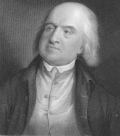
 In moral philosophy, the utilitarianism of which Bentham can be seen as the classical exponent has shown considerable stamina. There were two notable restatements of the theory in the nineteenth century: John Stuart Mill's Utilitarianism (1863) and Henry Sidgwick's lengthier and more searching The Methods of Ethics (1874). Neither of them had quite the internal consistency and self-sufficiency of Bentham's theory, largely because they both set themselves a problem which his own philosophy was so framed as to avoid having to face. Both men differed from him in that they wished to establish that the principle of utility—or what Sidgwick called the principle of rational benevolence—should be regarded not just as the principle on which society ought to be governed or managed, but as the principle by which each individual should endeavour to regulate his own conduct; and neither produced a very satisfactory answer to the problem of how individuals who were disposed to pursue their own happiness could be expected to conform to a moral principle that was essentially altruistic. In the first half of the twentieth century, partly owing to some influential criticisms in G. E. Moore's Principia Ethica (1903), utilitarianism went through a period of eclipse, but in the second half of the century there has been a striking revival of interest. David Lyons's The Forms and Limits of Utilitarianism (1965) raised debate on the subject to a new level of refinement, and more recently R. M. Hare's Moral Thinking (1981) has been described as the most substantial formulation of utilitarianism since Sidgwick. Another scholar wrote in 1982 that utilitarianism 'may not be the most loved but it is certainly still the most discussed moral theory of our time'.
(John Dinwiddy, Bentham, Past Masters, ed. Keith Thomas [Oxford: Oxford University Press, 1989], 120-1 [italics in original])
Note from KBJ: Two things. First, Dinwiddy neglected to mention J. J. C. Smart's monograph An Outline of a System of Utilitarian Ethics (Melbourne: Melbourne University Press, 1961), which preceded Lyons's book by four years. Smart is a noncognitivist act-utilitarian. Second, if you're interested in learning more about utilitarianism, of which there are, today, many prominent proponents (such as Peter Singer), I recommend William H. Shaw's Contemporary Ethics: Taking Account of Utilitarianism (Malden, MA: Blackwell Publishers, 1999). It is thorough, rigorous (I'm tempted to say relentless), and, not insignificantly, beautifully written.
 Keith Burgess-Jackson, J.D., Ph.D.