 I'm about to teach Philosophy of Law for the 12th time. I always enjoy it. Unfortunately, I have never found an adequate textbook. I have tried many, but there are grave faults (not to mention annoyances of various kinds) with each. I finally decided to dispense with a textbook. My students will use our library's databases for the readings. All it will cost them is the paper on which to print the items. I plan to do the same thing in my next Philosophy of Religion course. Perhaps by the time I retire, three or four decades from now, I will be textbook-free in all of my courses (Logic, Ethics, Philosophy of Religion, Philosophy of Law, and Social and Political Philosophy).
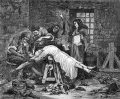
Here, in case you're interested, is the reading list for the Philosophy of Law course. As you can see, about a third of the course is devoted to the topic of torture, about which a great deal has been written—by law professors, social scientists, philosophers, and others. I want the students to come away from the topic with a better understanding of its complexities. The topic raises many questions of each type: conceptual, factual, and evaluative. As much thought as I have given to the topic of torture during the past few years, I should write a book about it; but I fear that too much has already been written. Then again, I, alone among scholars, have the truth about torture. What do you think? Will you promise to buy my book if I write it?
 Keith Burgess-Jackson, J.D., Ph.D.