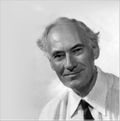
 The confusion of questions of fact with questions of logic, and of both with questions of ethics, however, runs right through this book. No one laid greater stress than Aristotle on clearly distinguishing the considerations appropriate to different kinds of question. If Aristotle were alive to-day he would not have ignored the advances in this direction made by modern philosophy as his scholastic admirers seem to do, and would not have written a book like this in which so many considerations of so many different logical sorts are confused together.
It must be added, however, that the precepts of morality which are enunciated by Fr. Higgins are worth arguing for. Catholic morality shows a rigour and sound sense noticeably absent from the lax secular morality of our day. It is not the precepts in this book that are objectionable; it is the confused methods of supporting them.
(J. J. C. Smart, review of Man as Man: The Science and Art of Ethics, by T. J. Higgins, Philosophy 25 [October 1950]: 368-70, at 369-70 [italics in original])
 Keith Burgess-Jackson, J.D., Ph.D.