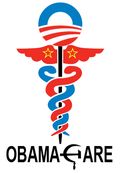
 Obama did not conceal the special status of the health care issue. In the speech announcing his presidential candidacy in February 2007, he vowed "that we will have universal health care in America by the end of the next president's first term." He said repeatedly that our existing health care system not only costs too much, but was unworthy of American ideals. "We are not a nation that lets hardworking families go without the coverage they deserve; or turns its back on those in need," he told the American Medical Association in 2009. "We are a nation that cares for its citizens. We are a people who look out for one another. That is what makes this the United States of America." Actually, every nation cares in some degree for its citizens; looking out for one another is not a distinctively American trait but a minimal part of civic friendship in any decent society. But then his point was that America, despite its citizens' remarkable individual virtues, had far to go to be a decent society. The view is widely shared in his family and his administration. Michelle Obama used to say in her standard campaign speech that the country is "just downright mean," though she implied the problem was curable. Her husband "knows that at some level there's a hole in our souls," she often said, and he "is the only person in this race who understands that before we can work on the problems, we have to fix our souls. Our souls are broken in this nation."
Part of the soul-fix was to reawaken Americans' belief in "the audacity of hope," the notion that big changes were still possible in politics if only the people would put aside their cynicism and fear, enlist behind a leader capable of seizing the moment, and together chant, "Yes, we can." The Obama campaign seized that moment and did not let go, but the point was not merely to win the election but also to change the country. He knew it was impossible to fix the American soul without working on "the problems," too, without showing that change could be embodied in new programs and institutions that would in turn shape a better American soul.
Of the myriad problems Obama wanted to tackle, health care was the biggest and the most emblematic of America's moral failings. When he addressed a joint session of Congress in September 2009, Obama quoted from Senator Teddy Kennedy's posthumous letter to him on precisely that point. Health care reform is the "'great unfinished business of our society,'" which is "'decisive for our future prosperity'"; but also, Kennedy emphasized, it "'concerns more than material things.'" It is "'above all a moral issue: at stake are not just the details of policy, but fundamental principles of social justice and the character of our country.'" Obama seconded Kennedy's point enthusiastically.
From the Right and Left, critics have questioned President Obama's decision to spend so much of his first 18 months on reforming health care rather than reviving the economy and restoring jobs. It was a fundamental mistake that will haunt the rest of his term, they say. A few interpret it not as a miscalculation but as a case of tunnel vision, like a pilot so obsessed with a sticky compass that he forgets to fly the plane as it heads right into a mountain. On Obama's own terms, however, the dogged persistence on health care—despite the economy, despite the plummeting polls, despite Scott Brown's election to Kennedy's place in the Senate—was progressive statesmanship of the highest order. Reforming health care was the defining issue of our time. And more importantly, it was the royal road to a less cruel, less selfish, less capitalist, more liberal America, and he would not abandon it or be forced off it.
As he told Congress, "we did not come here just to clean up crises," even one as big as the Great Recession. "We came to build a future." And the issue "central to that future" is health care. "I understand," he confessed, "that the politically safe move would be to kick the can further down the road—to defer reform one more year, or one more election. . . . But that's not what the moment calls for." We came here not "to fear the future" but "to shape it," to do the "great things" that "will meet history's test." He concluded, "That is our calling. That is our character." And that had been his theme all along. "Let us transform this nation," he implored in 2007. After the Iowa caucuses, he hailed those voters "who have the courage to remake the world as it should be," and after the New Hampshire caucuses he declared, "Yes, we can repair this world. Yes, we can." As election day 2008 approached, he promised, "We are five days away from fundamentally transforming the United States of America."
Those words mean this will be a different country when he's finished with it. If, Rip Van Winkle-style, one had slept though the Obama Administration, one would awaken, as it were, in a new land. The old word for such a profound change was revolution. As a good American progressive, however, Obama reckons his revolution will be one in a series, an unending series generated by progress or history itself. His reforms will connect to Woodrow Wilson's, Franklin Roosevelt's, and Lyndon Johnson's before him, and others yet to come, and all these together will constitute a steady evolution of American society and politics, a continual updating. That sounds reassuring, insofar as it promises to take the sting and surprise out of political change; but that predictability or security comes at the expense of liberty, because there is no choice about the whole of liberal-style progress and evolution. You could choose whether or not to make a revolution; a revolution might be defeated or reversed. But you don't get to deliberate about the inevitable, which is how progressives think of History. As Americans have been told for generations now, ad nauseam: you can't turn back the clock.
(Charles R. Kesler, "The Stakes of Obamacare," Claremont Review of Books 10 [summer 2010]: 10-6, at 11 [italics in original])
 Keith Burgess-Jackson, J.D., Ph.D.