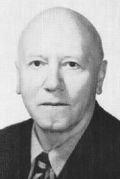
 By the time I left school there were at least three distinct and not easily reconcilable strands in my political views, and they have remained there ever since. One is an individualism and a distrust of the state and other collectivities, going back to my middle-class Liberal ancestry and confirmed by much that I have seen and heard in later life. Another is a profound distrust of democracy, based upon Plato and confirmed by my own observations and reflexions, and an unmitigated contempt for the imbecility and humbug of the party-system as it operates in every country which has a parliamentary government. The third is a recognition that the results of unguided and uncontrolled private enterprise in a thickly populated country under modern industrial conditions are disastrous in their waste of natural resources, their destruction of natural beauty, and their exploitation of human beings. This dates from my childish experiences of the unplanned development of Willesden, and has been confirmed, e.g., by the contrast between the industrial development of England and of Sweden. It tends to make me favour a strong central government and a considerable amount of planning, control, and if necessary coercion. But I would apply this to labour no less than to the landlord, the capitalist, and the businessman.
When I was young there was certainly too little public control, and these three other factors in production were certainly unduly favoured at the expense of the wage-drawers. Now, largely as a result of the two world-wars, the boot is almost certainly on the other foot. It is unreasonable to expect that exactly the right balance will exist at any given moment, or that, if it happened to do so, it would thereafter be maintained in changing circumstances. Speaking for myself, I have never been a supporter of laissez faire as such, since the very early days when I was for a moment taken in by Herbert Spencer. I have never at any time been a socialist, still less a communist. I cannot imagine myself at home in that collection of bone-heads unequally yoked with egg-heads and decorated with a broad lunatic fringe, which is the British Labour Party. As for the Communist Party, if nonsense imposed by violence attracted me, I would prefer the old vatted nonsense of the Roman Church to the thin pseudo-scientific vinegar provided by the Jesuits-without-Jesus of Moscow. To vote for a Liberal candidate in contemporary England is to throw one's vote down the drain. So, without enthusiasm, I vote for the Conservatives, mainly as a way of casting a vote against the Labour Party. Naturally one tends to become more conservative as one grows older and has more to lose. Not to be radical when one is young argues hardness of heart; to remain so when one is old suggests softness of head.
(C. D. Broad, "Autobiography," in The Philosophy of C. D. Broad, ed. Paul Arthur Schilpp, The Library of Living Philosophers, vol. 10 [New York: Tudor Publishing Company, 1959], 1-68, at 46-7 [essay written in 1954])
 Keith Burgess-Jackson, J.D., Ph.D.