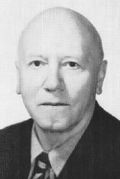
 In my published work I have stated my views about the relevance of psychical research to philosophy, and have tried to apply philosophical analysis and criticism to some of the notions current in psychical research. I have also expressed my astonishment at the contented ignorance and indifference of most contemporary Western philosophers in a matter which should deeply concern anyone who presumes to express reasoned opinions on the nature and status of man, on the limits and conditions of human cognition, on the inter-relations of the mental and the material aspects of the world, and so on. There are gratifying signs that, in England at any rate, this reproach is ceasing to apply to some of the younger philosophers. I regret to say that I have seen few, if any, such signs in the United States or in Sweden.
All that remains for me to say here on the topic of psychical research is this. I have had a certain number of anonymous sittings with mediums of good repute. In none of them have I received any communication which seemed to require for its explanation anything more than telepathic awareness by the medium of some of my own cognitive and emotional states. The vast majority of the statements made did not seem to require even that explanation; they were to all appearance just irrelevant twaddle. I have never witnessed any ostensibly supernormal physical phenomena under satisfactory conditions. As I know that I am quite easily taken in by the simplest of conjuring tricks, I should attach no weight whatever to any physical phenomenon that I might witness at a séance, unless the conditions had been checked beforehand and the medium and the sitters controlled throughout by an independent expert in such matters whom I knew and trusted. Even so, I should feel happier if the phenomena were recorded automatically by mechanical or electrical devices.
I should find it hard to say what hopes or fears or wishes, if any, lie at the back of my lifelong interest in psychical research. So far as I can tell, I have no desire to survive the death of my present body, and I should be considerably relieved if I could feel much surer than I do that no kind of survival is possible. The only empirical basis on which I can appraise life after death, if such there be, is what I know of life here and what mediums tell us of life hereafter. On neither basis of valuation does the prospect of survival hold any charms for me. Having had the luck, as it seems to me, to draw an eel from a sack full of adders, I do not wish to risk putting my hand into the sack again. And the prospect of an unending 'pleasant Sunday afternoon' in a noncomformist chapel on the astral plane would not attract me, even if I could find it credible. No doubt the simile of drawing a life at random, like a counter out of a bag, is in one important respect misleading. If one survives in any way, the dispositions which one has built up and the character which one has formed by the end of this life must surely be a most important factor in determining the initial equipment with which one will enter into one's next life. But this consideration does not encourage me to desire survival. For neither the dispositions which I have acquired nor the character which I have formed are such as to constitute a satisfactory innate equipment for another life.
I think that what lies behind my interest in the subject may possibly be this. I feel in my bones that the orthodox scientific account of man as an undesigned calculating-machine, and of non-human nature as a wider mechanism which turns out such machines among its other products, is fantastic nonsense, which no one in his senses could believe unless he kept it in a water-tight compartment away from all his other experiences and activities and beliefs. I should be sorry if anything so absurd and (as it seems to me) so dull and boring were to be true, and if those who take it for Gospel should happen to be right. Yet I must admit that, within the limited context in which it has arisen, viz., in the physiological and psychological laboratory, where a man or an animal is regarded simply as an object to be investigated and experimented upon, the prima facie case for this view of man and of non-human nature is immensely strong. It is no accident that experimental physiologists and psychologists (who are certainly no greater fools than the rest of us) almost unanimously accept it in their professional capacity. I should therefore welcome the irrefutable establishment of alleged facts, which, if genuine, would be so palpably inconsistent with this view as to leave it without a leg to stand upon.
(C. D. Broad, "Autobiography," in The Philosophy of C. D. Broad, ed. Paul Arthur Schilpp, The Library of Living Philosophers, vol. 10 [New York: Tudor Publishing Company, 1959], 1-68, at 56-8 [essay written in 1954])
 Keith Burgess-Jackson, J.D., Ph.D.