 I had now settled, as I believed, for the remainder of my existence into a purely literary life; if that can be called literary which continued to be occupied in a pre-eminent degree with politics, and not merely with theoretical, but practical politics, although a great part of the year was spent at a distance of many hundred miles from the chief seat of the politics of my own country, to which, and primarily for which, I wrote. But, in truth, the modern facilities of communication have not only removed all the disadvantages, to a political writer in tolerably easy circumstances, of distance from the scene of political action, but have converted them into advantages. The immediate and regular receipt of newspapers and periodicals keeps him au courant of even the most temporary politics, and gives him a much more correct view of the state and progress of opinion than he could acquire by personal contact with individuals: for every one’s social intercourse is more or less limited to particular sets or classes, whose impressions and no others reach him through that channel; and experience has taught me that those who give their time to the absorbing claims of what is called society, not having leisure to keep up a large acquaintance with the organs of opinion, remain much more ignorant of the general state either of the public mind, or of the active and instructed part of it, than a recluse who reads the newspapers need be. There are, no doubt, disadvantages in too long a separation from one’s country—in not occasionally renewing one’s impressions of the light in which men and things appear when seen from a position in the midst of them; but the deliberate judgment formed at a distance, and undisturbed by inequalities of perspective, is the most to be depended on, even for application to practice. Alternating between the two positions, I combined the advantages of both. And, though the inspirer of my best thoughts was no longer with me, I was not alone: she had left a daughter, my step-daughter, Miss Helen Taylor, the inheritor of much of her wisdom, and of all her nobleness of character, whose ever growing and ripening talents from that day to this have been devoted to the same great purposes, and have already made her name better and more widely known than was that of her mother, though far less so than I predict, that if she lives it is destined to become. Of the value of her direct co-operation with me, something will be said hereafter, of what I owe in the way of instruction to her great powers of original thought and soundness of practical judgment, it would be a vain attempt to give an adequate idea. Surely no one ever before was so fortunate, as, after such a loss as mine, to draw another prize in the lottery of life—another companion, stimulator, adviser, and instructor of the rarest quality. Whoever, either now or hereafter, may think of me and of the work I have done, must never forget that it is the product not of one intellect and conscience, but of three, the least considerable of whom, and above all the least original, is the one whose name is attached to it.
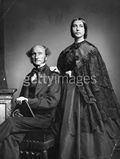
Note from KBJ: The image in this post shows Mill with his stepdaughter Helen.
 Keith Burgess-Jackson, J.D., Ph.D.