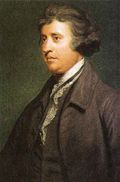
 It is this inability to wrestle with difficulty which has obliged the arbitrary assembly of France to commence their schemes of reform with abolition and total destruction. But is it in destroying and pulling down that skill is displayed? Your mob can do this as well at least as your assemblies. The shallowest understanding, the rudest hand, is more than equal to that task. Rage and phrenzy will pull down more in half an hour, than prudence, deliberation, and foresight can build up in an hundred years. The errors and defects of old establishments are visible and palpable. It calls for little ability to point them out; and where absolute power is given, it requires but a word wholly to abolish the vice and the establishment together. The same lazy but restless disposition, which loves sloth and hates quiet, directs these politicians, when they come to work, for supplying the place of what they have destroyed. To make every thing the reverse of what they have seen is quite as easy as to destroy. No difficulties occur in what has never been tried. Criticism is almost baffled in discovering the defects of what has not existed; and eager enthusiasm, and cheating hope, have all the wide field of imagination in which they may expatiate with little or no opposition.
At once to preserve and to reform is quite another thing. When the useful parts of an old establishment are kept, and what is superadded is to be fitted to what is retained, a vigorous mind, steady persevering attention, various powers of comparison and combination, and the resources of an understanding fruitful in expedients are to be exercised; they are to be exercised in a continued conflict with the combined force of opposite vices; with the obstinacy that rejects all improvement, and the levity that is fatigued and disgusted with every thing of which it is in possession. But you may object—'A process of this kind is slow. It is not fit for an assembly, which glories in performing in a few months the work of ages. Such a mode of reforming, possibly might take up many years.' Without question it might; and it ought. It is one of the excellencies of a method in which time is amongst the assistants, that its operation is slow, and in some cases almost imperceptible.
(Edmund Burke, Reflections on the Revolution in France, ed. L. G. Mitchell [New York: Oxford University Press, 1993], 168-9 [first published in 1790])
Note from KBJ: The progressive impulse is to destroy and rebuild, instead of reforming. We see this in the case of Obamacare, which is ironically called "health-care reform." Reform would involve such things as allowing interstate purchases of insurance and guaranteeing portability (from one employer to another). We also see it in the case of homosexual "marriage." Reform would involve granting particular legal rights (such as inheritance and medical decisionmaking) to homosexual couples, or even to creating a new institution called civil unions.
 Keith Burgess-Jackson, J.D., Ph.D.