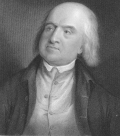
 Now it has been shown, that there is no sort of motive by which a man may not be prompted to engage in acts that are of a mischievous nature; that is, which may not come to act in the capacity of a seducing motive. It has been shown, on the other hand, that there are some motives which are remarkably less likely to operate in this way than others. It has also been shown, that the least likely of all is that of benevolence or good-will: the most common tendency of which, it has been shown, is to act in the character of a tutelary motive. It has also been shown, that even when by accident it acts in one way in the character of a seducing motive, still in another way it acts in the opposite character of a tutelary one. The motive of good-will, in as far as it respects the interests of one set of persons, may prompt a man to engage in acts which are productive of mischief to another and more extensive set: but this is only because his good-will is imperfect and confined: not taking into contemplation the interests of all the persons whose interests are at stake. The same motive, were the affection it issued from more enlarged, would operate effectually, in the character of a constraining motive, against that very act to which, by the supposition, it gives birth. This same sort of motive may therefore, without any real contradiction or deviation from truth, be ranked in the number of standing tutelary motives, notwithstanding the occasions in which it may act at the same time in the character of a seducing one.
(Jeremy Bentham, An Introduction to the Principles of Morals and Legislation, ed. J. H. Burns and H. L. A. Hart, in The Collected Works of Jeremy Bentham, ed. F. Rosen and Philip Schofield [Oxford: Clarendon Press, 1996], chap. 11, sec. 31, p. 135 [book first published in 1789])
Note from KBJ: Progressives are do-gooders. Think of all the progressive policies that are well-intended but in fact make things worse: the minimum wage; rent control; affirmative action; opposition to corporal punishment in the home and in schools; opposition to torture; no-fault divorce; and so on. Benevolence is not enough, for, as Bentham observes, it can generate maleficent (or at least nonbeneficent) actions. Progressives think that it's the thought (i.e., the motive) that counts. They're wrong. The road to hell is paved with good intentions.
 Keith Burgess-Jackson, J.D., Ph.D.