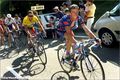
 I haven't watched 60 Minutes in many years, but I tuned in this evening to see the interview with Tyler Hamilton, who was a teammate of Lance Armstrong during the latter's early Tour de France victories. Hamilton is credible. He lied for years about his use of performance-enhancing substances, but only because his career and that of many other people depended on it. (This doesn't justify or excuse the lying; it merely explains it.)
Armstrong probably used performance-enhancing substances. It was common in the late 1990s and early 2000s to do so. I'm not sure which substances were prohibited and which weren't, or whether it's true that Armstrong failed a drug test and had it covered up by cycling authorities. What I do know is that Armstrong's rivals (such as Marco Pantani and Jan Ullrich) were using the same substances he was, and he still beat them. Sometimes I think we should allow cyclists to use whatever substances they want, and see who comes out on top. I am convinced that in a fair race, understood as a race in which everyone has the same drugs (including none at all), Armstrong could beat anyone.
It was poignant to hear Hamilton explain why he started using performance-enhancing substances. He was not naturally gifted as a cyclist, the way Lance Armstrong was. Hamilton wanted to ride at the highest level of the sport, in the Tour de France, and the only way for him to do so was to use banned substances. Note that he wasn't trying to win the race; he was trying to help a teammate (Armstrong) win. Later, when Hamilton left Armstrong, Hamilton continued to cheat, but this time to win. He went from trying to keep up to trying to get an advantage.
No matter how much character you have, it must be tempting to cheat if everyone around you is doing so. Hamilton devoted his life to cycling. To forswear performance-enhancing substances would be to relegate himself to domestic racing rather than international racing at the highest level. I can understand someone resisting the temptation, either for moral reasons or for fear of damaging one's health, but I can also understand someone (such as Hamilton) succumbing.
Do I believe that Armstrong got special treatment from cycling authorities? It's possible. He was the biggest star in a sport that was in trouble from drug scandals. (Pedro Delgado, the 1988 winner of the Tour de France, was accused of doping.) Authorities knew that if Armstrong fell, so would the sport, especially in all-important America. I believe that if Armstrong comes clean, it will cause many Americans to lose interest in professional cycling, and that will damage the sport tremendously. It may not affect bike rallies or recreational cycling, but it will affect viewership of racing on television and other forms of support. I hate to think that it will undermine Armstrong's Livestrong foundation, which does good work, but it could.
The three sports I love the most—baseball, cycling, and running—have been scandalized by the use of performance-enhancing substances. Am I at fault for supporting these sports and for worshipping their stars? Is it not fans such as me who create the powerful temptations to cheat? Food for thought.
 Keith Burgess-Jackson, J.D., Ph.D.