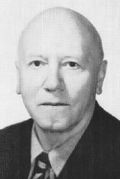
 If you want to make yourself as happy as possible it is fatal to keep this object constantly before your mind. The happiest people are those who are pretty fully occupied with some activity which they feel to be honourable and useful and which they perform with reasonable success. The most wretched lives are led by men who have nothing to do but think of their own happiness and scheme for it. Happiness which is deliberately sought generally turns out to be disappointing, and the self-conscious egoist divides his time between wanting what he has not and not wanting what he has.
(C. D. Broad, Five Types of Ethical Theory [London and Henley: Routledge & Kegan Paul, 1930], 74)
 Keith Burgess-Jackson, J.D., Ph.D.