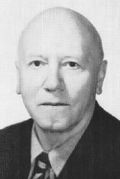
 We may now sum up the theory. An action is right if and only if the agent's sufficient motive in doing it is the fact that he recognises it to be required in the circumstances by a right principle of conduct. A principle of conduct is right if and only if it would be accepted on its own merits by any rational being, no matter what his special tastes and inclinations might be. It must therefore be a principle which is acceptable to rational beings simply because of its intrinsic form, and not because it is a rule for gaining some desired end. And a principle will be acceptable to all rational beings if and only if each could consistently will that all should adopt it and act on it. This is the essence of Kant's theory, as I understand it. . . .
(C. D. Broad, Five Types of Ethical Theory [London and Henley: Routledge & Kegan Paul, 1930], 121)
Note from KBJ: I read Kant differently. An act is right if and only if it is in accordance with the Categorical Imperative. An act is worthy if and only if it is (1) right and (2) motivated by duty. Some right acts are worthy and some are not.
 Keith Burgess-Jackson, J.D., Ph.D.