You have no idea how good I feel to be proud of my president again. The past eight years have been hell. Have a nice Memorial Day, everyone!
-
Memorial Day
–––––––
-
To the editor:
First, I offer first this disclaimer: I did not vote for Donald Trump last November, so my comment on Diana Wagman’s op-ed article, in which she tells of her participation in a spell-casting ritual on the president, is objective and disinterested in terms of politics. (“I put a spell on you, Mr. President,” Opinion, May 23)
When I was young low IQs were rated in three categories in descending order: idiot, moron and cretin. Rather than disparage unfortunate neo-nates who will mature but never go beyond those low levels, I will deplore Wagman’s all-too obvious juvenile arguments expressing what was once considered vile witchcraft: casting spells.
How is it possible for a grown person to undertake personally-driven necromancy against a president barely five months into a 48-month term? Or any sort of “black magic” at all in these scientifically enlightened times? Even if meant humorously, which her “activism” against Trump seems to contradict, how is it possible in fact for such embarrassing juvenile behavior to be featured in a major newspaper?
One can only hope those who are advocating California’s secession from the U.S. federal union will not succeed in my lifetime, nor in that of my grandchildren and their children too.
Jascha Kessler, Santa Monica
From Today’s Los Angeles Times
–––––––
-
I look forward to paying my respects to our brave men and women on this Memorial Day at Arlington National Cemetery later this morning.
— Donald J. Trump (@realDonaldTrump) May 29, 2017
Presidential Tweet
–––––––
-
Here are highlights from Stage 21 of the Giro d'Italia. What an exciting three-week tour! The winner, Dutch cyclist Tom Dumoulin, began the day in fourth place, but rode a fantastic time trial to leap over the three riders ahead of him. Dumoulin was in the saddle for more than 90 hours. Today's stage winner, Dutch cyclist Jos Van Emden, who finished just ahead of his compatriot Dumoulin, averaged 32.97 miles per hour, which is mind-boggling. Double Dutch!
Cycling
–––––––
-
He will be missed.
Gregg Allman, “Melissa”
–––––––
-
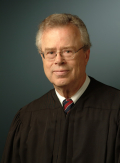 The majority’s new rule, which considers statements made by candidate Trump during the presidential campaign to conclude that the Executive Order does not mean what it says, is fraught with danger and impracticability. Apart from violating all established rules for construing unambiguous texts—whether statutes, regulations, executive orders, or, indeed, contracts—reliance on campaign statements to impose a new meaning on an unambiguous Executive Order is completely strange to judicial analysis.
The Supreme Court has repeatedly warned against “judicial psychoanalysis of a drafter’s heart of hearts.” And consistent with that warning, the Court has never, “in evaluating the legality of executive action, deferred to comments made by such officials to the media.” The Court’s reluctance to consider statements made in the course of campaigning derives from good sense and a recognition of the pitfalls that would accompany such an inquiry.
Because of their nature, campaign statements are unbounded resources by which to find intent of various kinds. They are often short-hand for larger ideas; they are explained, modified, retracted, and amplified as they are repeated and as new circumstances and arguments arise. And they are often ambiguous. A court applying the majority’s new rule could thus have free reign to select whichever expression of a candidate’s developing ideas best supports its desired conclusion.
Moreover, opening the door to the use of campaign statements to inform the text of later executive orders has no rational limit. If a court, dredging through the myriad remarks of a campaign, fails to find material to produce the desired outcome, what stops it from probing deeper to find statements from a previous campaign, or from a previous business conference, or from college?
And how would use of such statements take into account intervening acts, events, and influences? When a candidate wins the election to the presidency, he takes an oath of office to abide by the Constitution and the laws of the Nation; he appoints officers of the government and retains advisors, usually specialized in their field. Is there not the possibility that a candidate might have different intentions than a President in office? And after taking office, a President faces new external events that may prompt new approaches altogether. How would a court assess the effect of these intervening events on presidential intent without conducting judicial psychoanalysis?
The foibles of such a rule are unbounded and its adoption would have serious implications for the democratic process. As Judge Kozinski said well when he wrote about the Ninth Circuit’s use of the same campaign statements:
Even if a politician’s past statements were utterly clear and consistent, using them to yield a specific constitutional violation would suggest an absurd result—namely, that the policies of an elected official can be forever held hostage by the unguarded declarations of a candidate. If a court were to find that campaign skeletons prevented an official from pursuing otherwise constitutional policies, what could he do to cure the defect? Could he stand up and recant it all (“just kidding!”) and try again? Or would we also need a court to police the sincerity of that mea culpa—piercing into the public official’s “heart of hearts” to divine whether he really changed his mind, just as the Supreme Court has warned us not to?
The danger of the majority’s new rule is that it will enable any court to justify its decision to strike down any executive action with which it disagrees. It need only find one statement that contradicts the stated reasons for a subsequent executive action and thereby pronounce that reasons for the executive action are a pretext. This, I submit, is precisely what the majority opinion does.
Moreover, the unbounded nature of the majority’s new rule will leave the President and his Administration in a clearly untenable position for future action. It is undeniable that President Trump will need to engage in foreign policy regarding majority-Muslim nations, including those designated by the Order. And yet the majority now suggests that at least some of those future actions might also be subject to the same challenges upheld today. Presumably, the majority does not intend entirely to stop the President from creating policies that address these nations, but it gives the President no guidelines for “cleansing” himself of the “taint” they have purportedly identified.
Finally, the new rule would by itself chill political speech directed at voters seeking to make their election decision. It is hard to imagine a greater or more direct chill on campaign speech than the knowledge that any statement made may be used later to support the inference of some nefarious intent when official actions are inevitably subjected to legal challenges. Indeed, the majority does not even deny that it employs an approach that will limit communication to voters. Instead, it simply opines remarkably that such chilling is “a welcome restraint.”
The Supreme Court surely will shudder at the majority’s adoption of this new rule that has no limits or bounds—one that transforms the majority’s criticisms of a candidate’s various campaign statements into a constitutional violation.
(Judge Paul V. Niemeyer, dissenting in International Refugee Assistance Project v. Trump [United States Court of Appeals for the 4th Circuit, 25 May 2017]; citations omitted)
Note from KBJ: The Supreme Court of the United States will reverse the rulings by the 9th and 4th circuits, and it will follow Judge Niemeyer's reasoning in doing so. Write it down.
-
Here.
Ten Years Ago Today in This Blog
–––––––
-
Here.
Dilbert
–––––––
-
One of my favorite sporting events is the Indianapolis 500. I've been watching it (or listening to it) for 50 years. There was a horrific crash early in today's race. Both drivers—Jay Howard and Scott Dixon—escaped unscathed.
Motor Racing
–––––––
-
Froma Harrop’s sermon to campus liberals instructs them to “rise above” ultraconservative speakers by ignoring them. She is dead wrong to think this is an effective strategy. It invites them to proselytize and recruit unopposed.
She is also wrong to claim that demonstrating against these provocateurs is censoring their freedom of speech. Those who protest against the right wing are exercising their own rights to freedom of speech and assembly in the most effective way, by opposing a reprehensible ideology directly.
Harrop’s most serious miscalculation is to understate these views as merely offensive or disgusting. Make no mistake. The alt-right wingers who are speaking on campuses across the country are neo-Nazis, and we ignore or appease them at our peril. The Nazis came to power in Germany because the Left refused to unite to fight them.
The effectiveness of the strategy of confrontation was proved in this region in the 1990s when the United Front Against Fascism demonstrated on Whidbey Island and elsewhere against white supremacists who wanted to found a “white homeland” in the Pacific Northwest.
I hope that protesters on- and off-campus will ignore her advice. It is ignorant of the real history.
Megan Cornish, Seattle
Note from KBJ: This woman lives in Cloud Cuckoo Land. The fascists today are in her corner.
From Today’s Seattle Times
–––––––

