Skip to content

Keith Burgess-Jackson, J.D., Ph.D.

  • To the Editor:

    Re “The Meaning of Bob Dylan’s Silence” (Op-Ed, Oct. 26):

    I agree with Adam Kirsch that people ought to just let Bob Dylan take his sweet time in responding to being awarded the Nobel Prize in Literature. Any great writer would want to respond with care and grace under such intense circumstances, especially weeks before an election, and Mr. Dylan deserves his space.

    He certainly understands the weight and power of his own vocalizations. In fact, there has never been a Nobel recipient whose voice and verses are so deeply known by so many people. And Mr. Dylan knows that in light of the news, even more people are listening to him. He has already said quite a lot, and his voice and songs are permanently available to all.

    Instead of waiting for news about what has been tweeted to the media, I’ve got “Hurricane” and “Like a Rolling Stone” on a continuous loop. How does it feel? It is lovely to see Mr. Dylan modeling the lost art of thoughtfulness and care before public proclamation.

    CHRIS J. CUOMO

    Decatur, Ga.

    The writer is a professor of philosophy at the University of Georgia.

    Note from KBJ: I know this will sound like a lie, but I don't recall ever hearing a song by Bob Dylan. Not my cup of tea. By the way, does the letter writer's occupation (professor of philosophy) have anything to do with his or her letter? If so, I don't see it. If not, why did the author include it? And even if the author included it, why did the New York Times include it? Does the Times routinely say such things as "The writer is a plumber in New Mexico"?
    From Today’s New York Times

    –––––––

    Oct 27
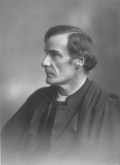
  • Frederick Robert Tennant (1866-1957)The aesthetic argument for theism becomes more persuasive when it renounces all claim to proof and appeals to alogical probability. And it becomes stronger when it takes as the most significant fact not the forthcomingness of beautiful phenomena but what may be called, with almost negligible need of qualification, the saturation of Nature with beauty. On the telescopic and on the microscopic scale, from the starry heaven to the siliceous skeleton of the diatom, in her inward parts (if scientific imagination be veridical) as well as on the surface, in flowers that "blush unseen" and gems that the "unfathomed caves of ocean bear", Nature is sublime or beautiful, and the exceptions do but prove the rule. However various be the taste for beauty, and however diverse the levels of its education or the degrees of its refinement, Nature elicits aesthetic sentiment from men severally and collectively; and the more fastidious becomes this taste, the more poignantly and the more lavishly does she gratify it. Indeed, from contemplation of Nature, whose "every prospect pleases", the atheist might be led to conclude that processes only need not to be fraught with aesthetic design in order to excite, almost without fail, aesthetic admiration. But his generalisation would become untenable as soon as he bethought himself of similar causal nexa into which human agency, seeking any end save beauty, enters. In general, man's productions (other than professed works of art), and almost only they, are aesthetically vile. An automobile, with its noises, stench, etc., can disgust all our senses simultaneously, and is not wholly untypical; while human output of larger scale is often not only unsightly and otherwise offensive in itself, but mars the fair face of Nature. Here, then, are two kinds of agency, ex hypothesi proceeding with indifference to the realisation of aesthetic values: we might almost say the one never achieves, while the other never misses, the beautiful. And the same contrast subsists between their processes as between their products. Compare, e.g., "the rattling looms and the hammering noise of human workshops" with Nature's silent or musical constructiveness; or the devastating stinks of chemical works with Nature's fragrant distillations. "In the very act of labouring as a machine [Nature] also sleeps as a picture."

    (F. R. Tennant, Philosophical Theology, vol. 2, The World, the Soul, and God [Cambridge: Cambridge University Press, 1930], 91-2 [italics and brackets in original; footnote omitted])

    F. R. Tennant (1866-1957) on the Aesthetic Argument for Theism

    –––––––

    Oct 26
  • DSC00126

    Kelvingrove Park, Glasgow. Click to enlarge.

    Scotland #13

    –––––––

    Oct 26
  • Even a big, fat, ugly, broken clock is right twice a day.

    Politics, Part 2

    –––––––

    Oct 26
  • This one went bad. This one went bad. This one went bad. This one has always been bad.

    Philosophers

    –––––––

    Oct 26
  • The Cubs haven't won the World Series yet, but if they do, this kid can claim to be Carnac the Magnificent.

    Baseball

    –––––––

    Oct 26
  • Synchronicity (1983).

    The Police, “Murder by Numbers” (1983)

    –––––––

    Oct 26
  • Here.

    Ten Years Ago Today in This Blog

    –––––––

    Oct 26
  • Here.

    Dilbert

    –––––––

    Oct 26
  • Here is Michelle Malkin's latest column. Remember: If you don't vote for Donald Trump, you're voting for Hillary Clinton. Are you prepared to justify that vote to your children and grandchildren?

    “Hillary Clinton’s Entrenched Climate of Hate”

    –––––––

    Oct 26
Previous Page Next Page

Blog at WordPress.com.

  • Subscribe Subscribed
    Keith Burgess-Jackson, J.D., Ph.D.

    Have a WordPress.com account? Log in now.

  • Keith Burgess-Jackson, J.D., Ph.D.
    View site in Reader
    Manage subscriptionsSign upLog in
    Report this content
    Collapse this bar