
Skip to content

Keith Burgess-Jackson, J.D., Ph.D.

  • Philosopher, by Jonathan HubbellTo the extent that judgments about individual scenarios are driven by stable moral principles, those judgments should not be affected by order of presentation of the scenarios. And to the extent that people choose to endorse or reject moral principles for stable, consistent reasons, those decisions should not be strongly influenced by the order in which several previous judgments were made. Philosophers—especially ethics PhDs at well-ranked research departments—should seemingly be particularly resistant to order effects on their scenario judgments and endorsements of principles, due to prior familiarity with the principles and general types of scenarios. However, even this ‘best-case’ group of participants showed substantial order effects on their judgments about moral scenarios and their endorsement of moral principles. Our analysis found no support for the view that philosophical expertise enhances the stability of moral judgment against order effects; it suggests, instead, that philosophical expertise may actually enhance post-hoc rationalization.

    (Eric Schwitzgebel and Fiery Cushman, "Expertise in Moral Reasoning? Order Effects on Moral Judgment in Professional Philosophers and Non-Philosophers," Mind & Language 27 [April 2012]: 135-53, at 147 [boldface added])

    Note from KBJ: Richard Posner had it right.
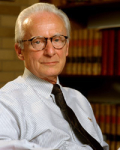
    Eric Schwitzgebel and Fiery Cushman on Philosophical Expertise

    –––––––

    Oct 2
  • Here.

    Ten Years Ago Today in This Blog

    –––––––

    Oct 2
  • Here.

    Dilbert

    –––––––

    Oct 2
  • To the Editor:

    Yes, Lionel Shriver, the left (whatever that means today) will survive the millennials. They are so humorless and becoming so boring and predictable that at some point the body politic will just shrug them off. Even among liberals indignation fatigue has already set in.

    ALMA SUZIN FLESCH

    New York

    From Today’s New York Times

    –––––––

    Oct 2
  • Ralph Matthew McInerny (1929-2010)A feature of the current situation in philosophy is that philosophers experience difficulty in explaining precisely what it is they do. A reason for the embarrassment is that so much of the original terrain of philosophy has been taken over by disciplines of latter-day origin that it is possible to think the whole of philosophy will eventually metamorphose into science and the ranks of the unemployed will become swollen with erstwhile seekers after wisdom. It was a response to this seeming threat to suggest that philosophy has no subject matter of its own but is a second-order discipline whose task it is to reflect critically on what is going on in disciplines that do have a subject matter. Hence, perhaps, the proliferation of such activities as philosophy of science, philosophy of history, philosophy of art, and so on.

    Whatever the present situation, Thomas Aquinas operated with a conception of philosophy that had come to him from the Greeks. Understood as the pursuit of wisdom, philosophy becomes an umbrella concept under which are gathered all disciplines that are necessary for or conducive to the acquisition of wisdom, and wisdom is taken to be such knowledge as men can attain of the divine. Classically understood, the ultimate aim of the philosophical quest is called not only wisdom but also theology. For Aristotle, what we would call natural sciences—and he was the originator of many of them—were essential elements of philosophical activity, not something distinguished from it. He held this view because he held that it is only through knowledge of the natural world that we can come to such knowledge as we do of things divine. Logic, natural sciences, mathematics, ethics and political philosophy, literary criticism, indeed all the liberal arts, were sought not onlv for their own sakes but as stepping stones to the culminating science of metaphysics. It could be said that, in its classical conception, philosophy included most of what is done in our universities. One can only imagine Aristotle's puzzlement, accordingly, if he were to come upon a department of philosophy distinguished from many other departments. How can philosophy be understood as a specialty? It would have boggled his mind. Thomas would have found our situation equally surprising.

    (Ralph McInerny, Ethica Thomistica: The Moral Philosophy of Thomas Aquinas, rev. ed. [Washington, DC: The Catholic University of America Press, 1997], 114-5)

    Ralph McInerny (1929-2010) on Aquinas’s Conception of Philosophy

    –––––––

    Oct 1
  • Open Fire (1978).

    Ronnie Montrose, “No Beginning / No End” (1978)

    –––––––

    Oct 1
  • This blog had 4,827 visits during September, which is an average of 160.9 visits per day. A year ago, the average was 162.3.

    Statistics

    –––––––

    Oct 1
  • I got to wondering which football conference has the most teams with state names. Here's what I found (using the ESPN website):

    • SEC (9): TN, FL, KY, GA, SC, MO, AL, MS, AR
    • Big Ten (8): MI, MD, IN, NE, WI, IA, MN, IL
    • Pac-12 (6): WA, CA, OR, UT, CO, AZ
    • Big 12 (4): WV, KS, TX, OK
    • Mountain West (4): NM, WY, NV, HI
    • ACC (2): NC, VA
    • American Athletic (1): CT
    • Independents (1): MA
    • Mid-American (1): OH
    • Sun Belt (1): ID

    That's 37 of the 50 states. The missing states are AK, DE, LA, ME, MT, NH, NJ, NY, ND, PA, RI, SD, and VT.

    Football

    –––––––

    Oct 1
  • Here.

    Ten Years Ago Today in This Blog

    –––––––

    Oct 1
  • Here.

    Dilbert

    –––––––

    Oct 1
Previous Page Next Page

Blog at WordPress.com.

  • Subscribe Subscribed
    Keith Burgess-Jackson, J.D., Ph.D.

    Have a WordPress.com account? Log in now.

  • Keith Burgess-Jackson, J.D., Ph.D.
    View site in Reader
    Manage subscriptionsSign upLog in
    Report this content
    Collapse this bar