To the Editor:
Re “When I’m Mistakenly Put on an Email Chain, Should I Hit ‘Reply All’ Asking to Be Removed?” (Business Day, Sept. 2):
!
AHARON SHIFRON-RONNIE
Concord, Calif.
To the Editor:
Re “When I’m Mistakenly Put on an Email Chain, Should I Hit ‘Reply All’ Asking to Be Removed?” (Business Day, Sept. 2):
!
AHARON SHIFRON-RONNIE
Concord, Calif.
–––––––

–––––––
Philosophers are territorial when it comes to the expression "begs the question." They insist that it has only one meaning, namely: to assume the point at issue. Though I'm a philosopher, I disagree. The expression is now widely used to mean "gives rise to [or brings about] the question." The expression is ambiguous. It has a meaning within philosophy (the technical meaning) and a meaning without philosophy (the everyday meaning).
I thought of a way for proponents of the everyday meaning to defend their usage. The word "beget" means "give rise to; bring about." If I beget the question, I give rise to (or bring about) the question. "Beg the question" can be understood as shorthand for "Beget the question." In case you're wondering, I got this idea from Rush Limbaugh, who uses the expression "beget the question" occasionally. Whether he's doing it for the reason I just gave or for some other reason, I don't know.
–––––––
Here.
–––––––
Here.
–––––––
To the Editor:
Re “University of Chicago Rebels Against Moves to Stifle Speech” (front page, Aug. 27):
To those academics who oppose content warnings in the classroom: We are not seeking to diminish your freedom of expression. We do not want to limit in any way your conversations or hinder the dialogues in which you might engage. All we ask for is the courtesy of a chance for our peers to brace themselves for painful memories and physical reactions to certain content, or to excuse themselves on the days that they are simply not up to the task of dealing with their trauma again. We won’t infringe on your right to teach, read, speak, view, print, question, scream whatever you want. Please don’t infringe on our right to feel safe. These two rights are not in opposition to each other.
Trigger warnings are not contrary to academia, to freedom of expression, to strong minds developing, or to braving the real world. They are the recognition that trauma, pain and suffering are real. They exist because of the bold cries of people unafraid to say, “I still hurt.” They are basic human compassion.
JACOB GINSBERG
Huntington Beach, Calif.
The writer is a 2016 graduate of Brown University.
Note from KBJ: Why are these individuals in college? They need treatment, not education.
–––––––
Do not try this at home.
–––––––
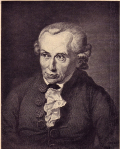 Punishment in general is physical evil accruing from moral evil. It is either deterrent or else retributive. Punishments are deterrent if their sole purpose is to prevent an evil from arising; they are retributive when they are imposed because an evil has been done. Punishments are, therefore, a means of preventing an evil or of punishing it. Those imposed by governments are always deterrent. They are meant to deter the sinner himself or to deter others by making an example of him. But the punishments imposed by a being who is guided by moral standards are retributive.
(Immanuel Kant, Lectures on Ethics, trans. Louis Infield, The Library of Religion and Culture, ed. Benjamin Nelson [New York: Harper & Row, 1963 (first published in 1930)], 55)
Desolation Boulevard (1974).
–––––––
Here.
–––––––

