If you've been reading this blog for any length of time, you know that I have said, repeatedly, that money doesn't vote. People vote. Aren't we seeing confirmation of that in Jeb Bush's abject failure? He had all the money in the world, which allowed him to broadcast his message far and wide. The voters didn't like what they heard. There should be no limits on what an individual or corporation may spend in a political campaign. (A corporation is merely a collection of like-minded individuals.)
-
Politics, Part 2
–––––––
-
I watched the Republican debate carefully this evening. Donald Trump destroyed Marco Rubio, who is now the candidate of the Republican establishment, the donor class, the consultancy class, and the punditry.
Politics
–––––––
-
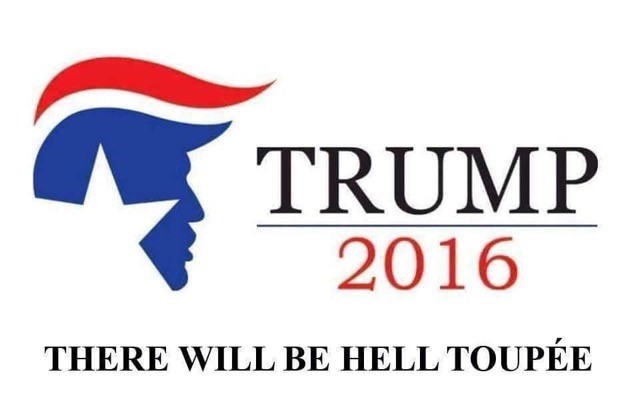
Humor
–––––––
-
What's the mystery? Even cats love warm weather!
Animals
–––––––
-
 Some moral beliefs appear to be based directly on moral standards that are alternatives to utilitarian and RP [Respect-for-Persons] theories. The moral impermissibility of contraception is an example. Its moral impermissibility can be derived most plausibly from the moral standard that those actions which are “unnatural” are wrong. Another example is the belief that homosexual relationships are wrong. This belief is also most plausibly derived from the moral standard that actions that are “unnatural” are wrong. If it can be shown that these two prohibitions cannot be derived from either RP or utilitarian theory and that these two theories, taken together, are generally adequate to account for common morality, this is a powerful argument that these two traditional prohibitions should be rejected. It is of course possible to maintain that these traditional prohibitions should be upheld and that any theory with contrary implications, such as RP or utilitarian theory, must be rejected. However, the fact that RP and utilitarian theories have, taken together, such wide extension over common morality and yet cannot justify the traditional moral evaluations of contraception and homosexual relationships strongly suggests that the traditional evaluations are themselves incorrect.
(C. E. Harris, "Is Moral Theory Useful in Practical Ethics?," Teaching Ethics 10 [fall 2009]: 51-67, at 65)
Note from KBJ: Where to begin? First, this is a scandalous rendering of Natural Law. Harris should be ashamed of himself. Second, the idea that one may combine theories and see whether they "account for common morality" is absurd. Natural Law is a distinct normative ethical theory that competes directly with utilitarianism and Kantianism. All Harris has shown is that he, personally, sees nothing wrong with either contraception or homosexual relationships. He has given no reason for anyone else to share these views. Life is short; I won't be reading anything else by C. E. Harris.
-
William Kristol has still not gotten right with Donald Trump.
Politics
–––––––
-
Fountains of Light (1977). 1:49 to 2:20 and 3:55 to 4:26. O.M.G.
-
Here.
Ten Years Ago Today in This Blog
–––––––
-
Here.
Dilbert
–––––––
-
To the Editor:
Re “Cruz Takes Hit and Fires Aide for Rubio Clip” (front page, Feb. 23):
Ted Cruz has had to apologize and effect changes in his campaign staff after misrepresentation of Marco Rubio’s statements about the Bible.
In this instance, all parties—and the electorate—would have been better served if both candidates, who profess to venerate the Constitution, had heeded Article VI of that document: “No religious test shall ever be required as a qualification to any office or public trust under the United States.”
JOSEPH D. McINERNEY
Lutherville, Md.
Note from KBJ: What's shocking is that Joseph McInerney thinks this Constitution provision applies.
From Today’s New York Times
–––––––

