Here are the latest rankings.
-
Football
–––––––
-
Here.
Ten Years Ago Today in This Blog
–––––––
-
Here.
Dilbert
–––––––
-
Some people are determined to be unhappy and will be unhappy no matter how much wealth, power, social status, and privilege they have. Unfortunately, such people resent happiness in others and do what they can to make others miserable. These people are known as progressives. In a little over a year, the experiment with cosmopolitanism will be over. Those of you who voted for it should be ashamed of yourselves.
Unhappy Campers
–––––––
-
To the Editor:
Alec MacGillis wonders, Why would anyone dependent on public assistance vote against his or her “own interests” by voting Republican? Let me help: Perhaps these people on public assistance are not as venal as Democrats may think. Perhaps they see their “interests” as self-reliance and personal success rather than government dependency.
JOHN W. HOWARD
San Diego
Note from KBJ: I have never voted for someone because I thought doing so would benefit me specifically, as opposed to Americans generally. If you wonder why the poor vote Republican, you are making two mistakes. First, you are assuming that people do, or should, vote out of self-interest. Second, you are understanding self-interest in material terms. Is it in a poor person's long-term self-interest to be given things? (That's a rhetorical question, for those of you in the brain-dead progressive camp.) Jesus had it right long ago: If you give a man a fish, he eats for a day. If you teach him to fish, he eats for a lifetime. The aim of government is to make people self-reliant, self-sufficient, and responsible. If you reward inactivity, you get more of it.
From Today’s New York Times
–––––––
-
 Before Darwin's day we knew that the baby is not moral and is not rational; if that does not discredit our reason or our morals, no more does the fact that our ancestors were not.
(E. F. Carritt, The Theory of Morals: An Introduction to Ethical Philosophy [London: Oxford University Press, 1928], 18)
-
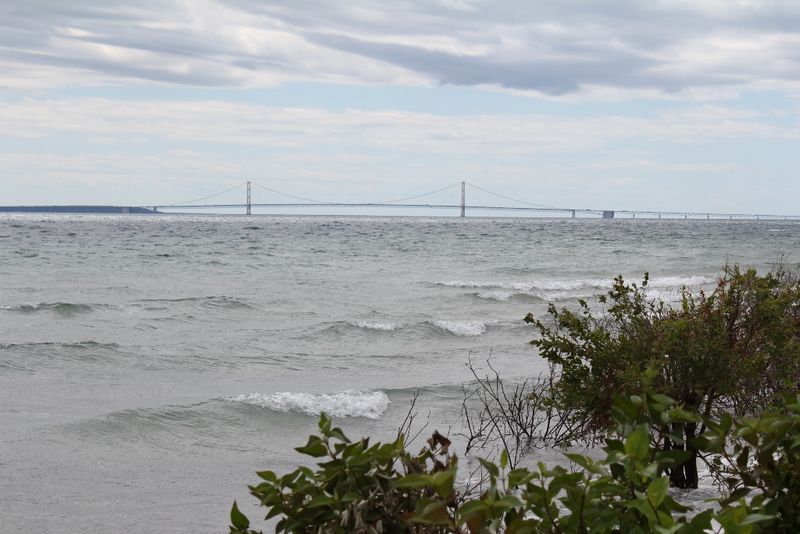
The Mackinac Bridge from Mackinac Island. Click to enlarge.
Michigan #26
–––––––
-
Here.
Ten Years Ago Today in This Blog
–––––––
-
Here.
Dilbert
–––––––
-
Mark Spahn sent a link to this.
Academentia
–––––––

