Here.
-
Ten Years Ago Today in This Blog
–––––––
-
Here.
Dilbert
–––––––
-
 [T]he authority of philosophy consists in its being a theoretical subject. If philosophers are going to offer moral opinions, they need to have some claim to attention. They are not, as philosophers, necessarily gifted with unusual insight or imagination, and they may not have a significantly wide experience or knowledge of the world. Their claim to attention rests on their capacity for drawing distinctions, seeing the consequences of assumptions, and so forth: in general, on their ability to develop and control a theoretical structure. Their special contribution to substantive ethical issues, then, is likely to be found in a theoretical approach to them, and one of the most common enterprises in moral philosophy at the present time is the development of various ethical theories.
(Bernard Williams, "Ethics," chap. 10 in Philosophy: A Guide Through the Subject, ed. A. C. Grayling [New York: Oxford University Press, 1995], 545-82, at 549)
-
To the Editor:
As a believer in the value of organized religion, I have often been challenged to justify the evil acts that have been committed throughout history in the name of religion. I have responded that these acts were all about tribalism and political power and had nothing to do with the core values of community religious practice.
It was painful to read how supposed Islamic scholars find Quranic justification for systematic rape. What a cynical exploitation of young men’s natural sexual urges, providing the Islamic State with a limitless supply of martyrs.
Almost every religion at least acknowledges that those who practice other religions are still children of God. Those who abuse people’s religious faith to further their political ends may one day face an ultimate reckoning for their actions.
GLENN PAUL MANION
New Hyde Park, N.Y.
From Today’s New York Times
–––––––
-
Breakfast in America (1979).
-
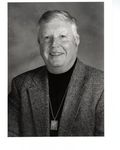 Contraception was immoral yesterday, it is so today, and it will be so tomorrow and forever, because it presupposes—on the part of anyone who is clearly aware of what he is doing—a willingness to act in a way that might be conducive to a basic human good (the initiation of a new human life) together with an unwillingness to permit life to begin to be. This unwillingness is no mere wish nor permission. Rather, it is an effective willing prepared to implement itself in such a way as to bring about its objective in reality.
(Germain G. Grisez, "Reflections on the Contraception Controversy," The American Ecclesiastical Review 152 [May 1965]: 324-32, at 325)
-
Jeff Bezos replies to the hatchet job by the New York Times.
Commerce
–––––––
-
Here.
Ten Years Ago Today in This Blog
–––––––
-
Here.
Dilbert
–––––––
-
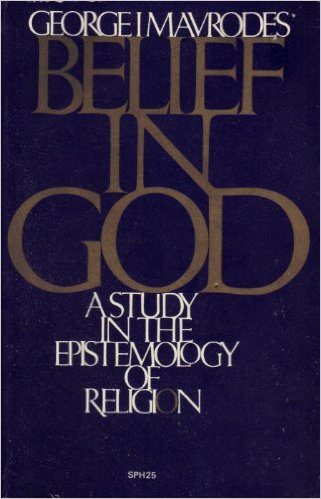
What I’m Reading
–––––––

