The 2015 Tour de France began today. Rohan Dennis of Australia, who rides for the BMC team, won the first stage, an individual time trial of 8.57 miles. Dennis completed the course in 14:56, which is an average speed of 34.45 miles per hour. Incredible. To put it in perspective, I averaged 17.15 miles per hour during yesterday's 30.6-mile ride. Then again, I'm 58 years old.
-
Cycling
–––––––
-
Here.
Ten Years Ago Today in This Blog
–––––––
-
Here.
Dilbert
–––––––
-
Seven-Inning Felix (10-5), who is being paid $24,857,000 this season by the Seattle Mariners, was outpitched by Kendall Graveman of the Oakland Athletics, who earns $507,500. (Don't get up for your calculator: Felix earns 48.9 times what Graveman earns.) Felix threw 95 pitches in seven innings, which tired him out so much that he couldn't continue. He is on track to get 19.0 victories. He has never won 20 games.
Baseball
–––––––
-
 Marriage is more than just a relationship that is publicly avowed, or a cluster of concrete legal rights and obligations. It is a legal relationship that has a generally-understood social meaning of a certain kind. None of the options currently available to same-sex couples—'commitment ceremonies' with sympathetic clergymen, private contracts, or 'registered domestic partnerships'—has a social meaning of this kind; none of these options is as familiar and widely understood as marriage. As a result, these options will be less effective than marriage for couples who want to affirm their commitment in a way that the community will readily understand. To fulfil this desire effectively, same-sex couples need to enter a relationship that has a social meaning of the appropriate kind. For this, they need the legal status of marriage, since, as I have argued, the social meaning is tied to this legal status. In effect, they need to be able to say that they are married. Suppose that same-sex unions had a different name—as it might be, 'quarriage'. There will presumably be many fewer same-sex quarriages than opposite-sex marriages; so the term 'quarriage' would be much less familiar and widely understood than 'marriage', and for this reason quarriage would be less effective at fulfilling this serious desire than marriage.
There is no reason to doubt that same-sex couples could have access to a relationship that has the social meaning of marriage. True, the current social meaning of marriage involves the assumption that marriage is the union of one man and one woman. But if same-sex couples could legally marry, it would presumably soon become common knowledge that some marriages were same-sex marriages. So introducing same-sex marriage would change the social meaning of marriage. But there is no reason to think that it would change society's core expectations of marriage (that marriage involves sexual intimacy, domestic and economic cooperation and a voluntary mutual commitment). Thus, we may presume that the legalization of same-sex marriage would give same-sex couples access to the social meaning of marriage.
(Ralph Wedgwood, "The Fundamental Argument for Same-Sex Marriage," The Journal of Political Philosophy 7 [September 1999]: 225-42, at 241 [italics in original])
Note from KBJ: Wedgwood and other supporters of homosexual "marriage" are in for a shock. They think that the social meaning of marriage will transfer automatically to anything the law deems a marriage. To see why this is unlikely, suppose the law decreed, today, that human beings are married (or can become married, by taking proper steps) to their companion animals, such as cats and dogs. Are people likely to start thinking of these relationships as marriages? Obviously not. What they'll do, almost certainly, is reserve the word "marriage" for unions of one man and one woman. If people refer to the new relationships as marriage at all, it will be with a modifier, such as "animal-human marriage," or "animal-human 'marriage'." You can't (thank goodness) change the social meaning of a thing through legislation or court decree. I predict that very few people will refer to homosexual "marriages" as "marriage." The language will be either (1) "traditional marriage" (a retronym) and "homosexual marriage" or (2) "marriage" and "homosexual marriage." If you think this is unlikely, consider how often you hear the term "male nurse," many years after men went into nursing.
Note 2 from KBJ: My friend Bill Vallicella (a.k.a. Maverick Philosopher) has some thoughts about terminology.
Note 3 from KBJ: Perhaps "real marriage" and "homosexual marriage" will catch on. By the way, don't you love it that progressive elites can go only so far in ramming homosexual "marriage" down our throats? They can confer a bundle of legal rights on two men or two women (just as they can confer rights on chickens by requiring that egg-laying chickens be given so much cage space), but (1) they can't change people's minds (beliefs, values, attitudes), (2) they can't change the way people speak, (3) they can't change church doctrine (in Roman Catholicism, homosexuality is "a disordered sexual inclination"), and (4) they can't make something that is morally unacceptable (or widely believed to be morally unacceptable) morally acceptable. How long ago was it that homosexuality was a diagnosable mental disorder? Here is the text from page 44 of Diagnostic and Statistical Manual of Mental Disorders, 2d ed. (Washington, DC: American Psychiatric Association, 1968), commonly known as DSM-II:
302 Sexual deviations This category is for individuals whose sexual interests are directed primarily toward objects other than people of the opposite sex, toward sexual acts not usually associated with coitus, or toward coitus performed under bizarre circumstances as in necrophilia, pedophilia, sexual sadism, and fetishism. Even though many find their practices distasteful, they remain unable to substitute normal sexual behavior for them. This diagnosis is not appropriate for individuals who perform deviant sexual acts because normal sexual objects are not available to them.
302.0 Homosexuality
302.1 Fetishism
302.2 Pedophilia
302.3 Transvestitism
302.4 Exhibitionism
302.5* Voyeurism*
302.6* Sadism*
302.7* Masochism*
302.8 Other sexual deviation
[302.9 Unspecified sexual deviation]
How many of these sexual deviations are already normalized? Which will be next to be normalized?
Note 4 from KBJ: Homosexuality was removed from the DSM in 1974 as a result of political protests by homosexual activists and their sympathizers. The psychiatric community caved. Think about that.
-
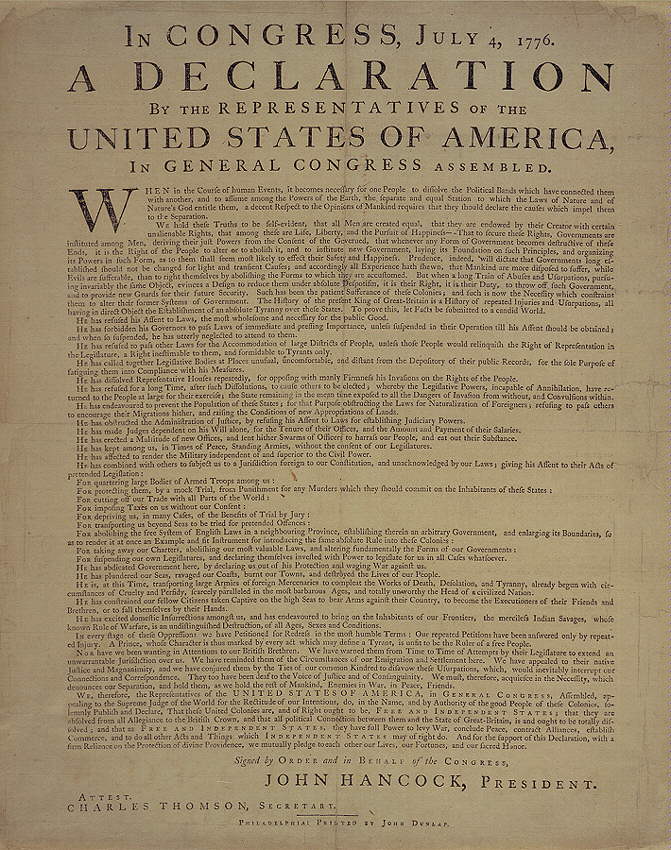
4 July 1776
–––––––
-
To the Editor:
Privacy protection does exist for data previously collected from consumers even if a company is sold and the data is transferred (“When a Company Is Put Up for Sale, in Many Cases, Your Personal Data Is, Too,” Business Day, June 29).
The Federal Trade Commission has made it abundantly clear, as recently as March of this year in an advisory, that Section 5 of the Federal Trade Commission Act requires consumer consent if personal data will be used in new or different ways than consumers were told when it was collected. That is so even if a company reserves the right to transfer consumer data upon sale of the company.
CHRISTOPHER WOLF
JULES POLONETSKY
Washington
The writers are co-chairmen of the Future of Privacy Forum, a think tank.
From Today’s New York Times
–––––––
-
 In sum, then, marriage is a legal relationship between two people, involving mutual legal rights and obligations, which reflect society's shared expectations about marriage; and the core of these expectations is that marriage typically involves sexual intimacy, economic and domestic cooperation, and a voluntary mutual commitment to sustaining this relationship.
(Ralph Wedgwood, "The Fundamental Argument for Same-Sex Marriage," The Journal of Political Philosophy 7 [September 1999]: 225-42, at 233)
Note from KBJ: This is known as persuasive definition. The word "marriage" has a favorable connotation. Unfortunately for Wedgwood, it doesn't include what he wants it to include, so he redefines it so that it does include what he wants it to include. Voila! Two men or two women can now be married! Compare Black's Law Dictionary, 5th ed. (1979), which defines "marriage" as "Legal union of one man and one woman as husband and wife." Another shady thing about Wedgwood's "definition" is that he doesn't mention children. The purpose and point of marriage, as everyone knows, and as the law has long recognized, is to bind a man and a woman to one another for the sake of any children they produce. Please, please, please don't say that infertile heterosexual couples are allowed to marry, as though that refutes my claim. Immature 21-year-olds are allowed to drink alcohol, but that doesn't mean the purpose and point of the drinking age isn't to prevent immature individuals from drinking alcohol.
Ralph Wedgwood on Marriage
–––––––
-
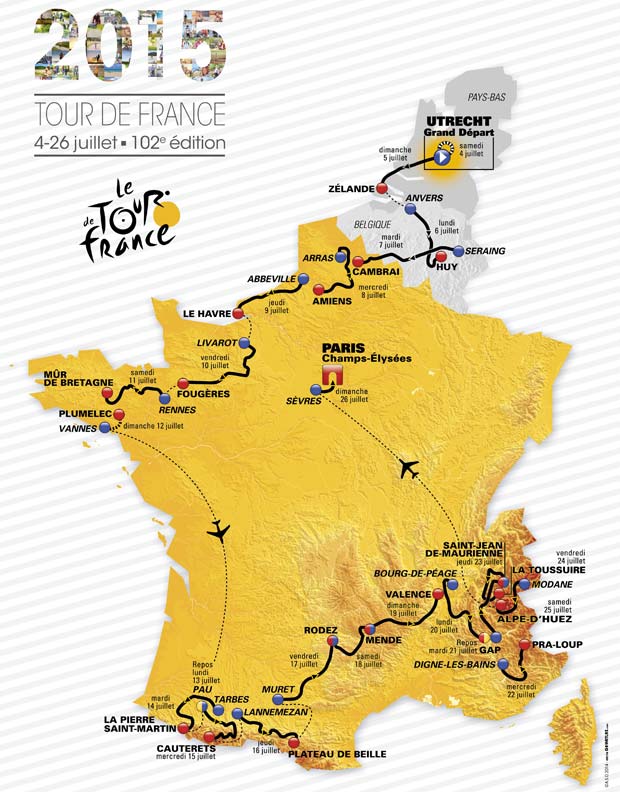
The Tour de France starts tomorrow.
Cycling
–––––––
-
Here.
Ten Years Ago Today in This Blog
–––––––

