Skip to content

Keith Burgess-Jackson, J.D., Ph.D.

  • Regarding “Pelosi dismisses impeachment as too ‘divisive’ ” (March 12): As much as I’d love to see President Trump impeached, I agree with House Speaker Nancy Pelosi’s hesitation to rush the process.

    One need only compare the former Presidents Richard Nixon and Bill Clinton impeachments to see the difference between a bipartisan and nakedly partisan effort.

    The last thing the Democrats need is to pursue impeachment with zero Republican support only to see it blow up in their faces and hand Trump another four years.

    John Brooks, Fairfax

    Trump Derangement Syndrome, from Today’s San Francisco Chronicle

    –––––––

    Mar 17
  • Parfit  Reasons and Persons (1984  1987)

    What I’m Reading

    –––––––

    Mar 17
  • So it was indeed (just proven in court papers) “last in his class” (Annapolis) John McCain that sent the Fake Dossier to the FBI and Media hoping to have it printed BEFORE the Election. He & the Dems, working together, failed (as usual). Even the Fake News refused this garbage!

    — Donald J. Trump (@realDonaldTrump) March 17, 2019

    https://platform.twitter.com/widgets.js

    Presidential Tweet

    –––––––

    Mar 17
  • Bernard Gert (1934-2011) 1Philosophers tend to distinguish facts from values and claim that we all agree on the facts and disagree on the values. In my experience, the exact opposite is true. We all agree on our values and disagree about the facts. If you look carefully and precisely at what are presented as examples of moral disagreements, I think your own experience will confIrm this claim. Take the example of Star Wars vs. Disarmament. Is there any disagreement in values? Does one side want to blow-up the world and the other side save it? Of course not. Everyone wants to save the world. One side thinks that Star Wars will save it, the other side thinks that disarmament will save it. They disagree about the probable consequences of different courses of action, or what the facts of the case are. They all have the same values—namely avoiding the death and destruction that will accompany any nuclear exchange.

    (Bernard Gert, “Morality Versus Slogans,” Center for the Study of Ethics in Society 3 [December 1989]: 3-32, at 26)

    Bernard Gert (1934-2011) on Facts and Values

    –––––––

    Mar 16
  • Here.

    Ten Years Ago Today in This Blog

    –––––––

    Mar 16
  • Here.

    Dilbert

    –––––––

    Mar 16
  • Broken Heart (1977).

    The Babys, “Rescue Me” (1977)

    –––––––

    Mar 16
  • Danny Westneat’s recent column makes a case for Americans “impeaching” President Donald Trump at the 2020 polls. Westneat neglects to address the importance of a real impeachment: an acknowledgment that Trump has dangerously diminished our country on the world stage.

    In the long-run that may be the most treacherous impact he has, and why we need to impeach him rather than simply vote him out of office. We must show the world that Trump is a one-time, Russian assisted national mistake.

    He has destroyed our reputation as a freedom supporting world power, specifically as a country that leads the fight against climate change, encourages upward mobility through education for all and consistently works to create a peaceful, prosperous world.

    Without impeachment, it could take decades before the global community will trust us not to elect someone like Trump again.

    Without that trust, we lose our alliances, trade agreements, investments and international respect.

    Impeachment says to the world, “We realize we made a mistake. We corrected it because our democratic system is designed to let us correct such mistakes.”

    Patricia J. Schwab, Seattle

    Trump Derangement Syndrome, from Today’s Seattle Times

    –––––––

    Mar 16
  • Veto Message to the House of Representatives for H.J. Res. 46: https://t.co/9Z5JHAUv6N pic.twitter.com/lA4RSYTZo0

    — Donald J. Trump (@realDonaldTrump) March 16, 2019

    https://platform.twitter.com/widgets.js

    Presidential Tweet

    –––––––

    Mar 16
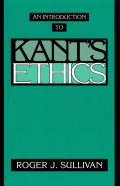
  • Sullivan  An Introduction to Kant's Ethics (1994)True to the liberal tradition, then, Kant regarded the fundamental task of government as negative, as imposing those constraints that are necessary to protect and promote each person's freedom. The legal system of the state must constrain both the power of the sovereign and the citizens' unregenerate desires in order to establish the conditions under which people can live together in peace as a community. The basic laws of the legal code therefore should set out negative obligations, duties prohibiting people from interfering with the freedom of their fellow citizens. (Few terms have more importance than "duty" in Kant's political theory, and, as we shall see, in his ethical theory as well.)

    For Kant, then, the most basic function of civil law is not to grant entitlements but to lay down obligations. Whatever the benefits arising from living in the state, Kant believed that citizenship should be construed as a task, a responsibility to contribute to those moral conditions necessary if political security and order are to endure and flourish. By contrast, rights are derivative: they arise only from corresponding duties that the state enforces.

    (Roger J. Sullivan, An Introduction to Kant's Ethics [Cambridge: Cambridge University Press, 1994], 10-1 [italics in original])

    Immanuel Kant (1724-1804) on the Fundamental Task of Government

    –––––––

    Mar 15
Previous Page Next Page

Blog at WordPress.com.

  • Subscribe Subscribed
    Keith Burgess-Jackson, J.D., Ph.D.

    Have a WordPress.com account? Log in now.

  • Keith Burgess-Jackson, J.D., Ph.D.
    View site in Reader
    Manage subscriptionsSign upLog in
    Report this content
    Collapse this bar