Here.
-
Dilbert
–––––––
-

Cycling
–––––––
-
Vincebus Eruptum (1968). Fifty years gone. Here is the All Music review.
-
Here is Kurt Schlichter's latest column.
“Congressman Strangelove”
–––––––
-
Donald Trump's approval rating is 49%. Barack Obama's approval rating at the same point of his presidency (6 December 2010) was 47%.
Politics
–––––––
-
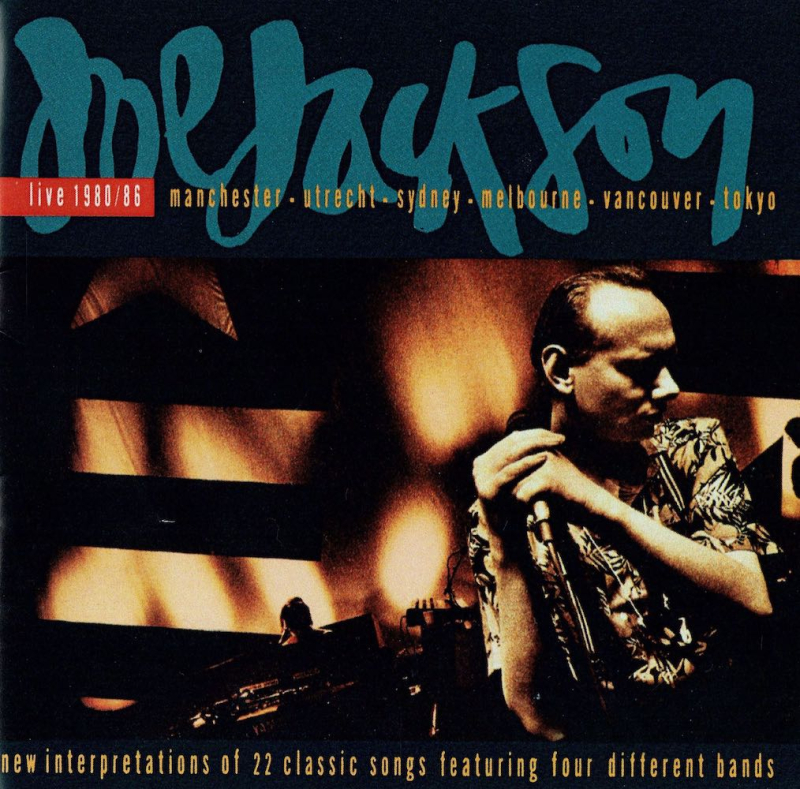
Now Playing
–––––––
-
It is clear that President George H. W. Bush was a class act: humble, a gentleman, a war veteran. He treated all people with respect regardless of station in life or politics, was respected by our allies, was an intelligent communicator, did not lie to his constituents and put country over personal gain.
Sadly, none of these attributions apply to President Donald Trump. The only thing he may have in common with Mr. Bush is that he, too, will be a one-term president. One can only hope.
MIKE HUDAK
Pleasant Hills
Note from KBJ: You keep thinking that, Mike. You're going to be miserable for the next six years. Many of us are delighted to have Donald Trump as our president, and we're going to vote for him again.
-
Working hard, thank you! pic.twitter.com/3SoWTkZjP6
— Donald J. Trump (@realDonaldTrump) December 6, 2018
Presidential Tweet
–––––––
-
 Clergymen, too, do not make entirely satisfactory moralists. When controversial moral issues arise, religious leaders are routinely asked their opinions; but since only a minority of the population regularly attends church or synagogue, the result is a distorted impression of moral attitudes in the community. Clerical pronouncements on moral issues give undue importance to sexual morality, so much so that terms like "loose morals" are now automatically taken to refer to sexual conduct rather than, say, tax evasion, although the latter may be the more serious offense. To restore balance, secular moralists should be consulted as often as religious moralists—and who is better qualified as a secular moralist than a moral philosopher?
This suggestion is not meant to imply that moral philosophers should pontificate from their professorial chairs while the masses dutifully obey. Moral positions should be discussed and argued about, not accepted on the authority of God or god-professor. The moral philosopher does not present his views as derivations from authority or from ancient books. The philosopher's aim is to show that reasoning and argument favor one position rather than another. It may not always be possible to achieve this aim. Sometimes moral arguments do break down in a disagreement that reason seems unable to resolve. But at other times quite rigorous argument against certain views will be possible. Philosophers may be able to locate an inconsistency between two positions that someone wants to hold simultaneously. By using their understanding of the nature of moral concepts and, above all, by probing more deeply and taking less for granted than others do, philosophers may be able to raise the standard of moral discussion from its present depressingly low level.
(Peter Singer, "Philosophers Are Back on the Job," chap. 3 in Unsanctifying Human Life: Essays on Ethics, ed. Helga Kuhse [Malden, MA: Blackwell Publishers, 2002], 53-65, at 62-3 [essay first published in 1974])
Note from KBJ: Why does Singer think that "reasoning and argument favor one position rather than another"? Has he forgotten Quine's dictum that "Any statement can be held true come what may, if we make drastic enough adjustments elsewhere in the system"? Suppose Singer makes an argument for conclusion C. He is saying two things: first, that the truth of his premises is incompatible with the falsity of C; and second, that he accepts the truth of his premises. That Singer accepts the truth of his premises is no reason for me (or anyone else) to accept the truth of his premises. I may agree with Singer that the truth of his premises is incompatible with the falsity of C, but nonetheless reject C. All this requires is that I reject at least one of his premises. The upshot is this: Singer's being a philosopher is irrelevant to the truth or acceptability of his premises. The expertise of philosophers is technical, not evaluative.
-
Black Sabbath (1970).

