Click to enlarge.
Click to enlarge.
–––––––
The president’s constant refrain is to call the media the enemy of the people (“At the White House, Trump meets, berates the press,” Page A2, Nov. 8). And yet the media continue to play along. It is time for the Fourth Estate to wake up to this new abnormal.
Here is a crazy idea: Don’t cover him. Of course, keep covering what he and his administration are doing, but just stop showing up for the daily press briefings, and move on to other news items. It is a good bet that most people do not need yet another story about Donald Trump to confirm that this presidency is a train wreck. The media are treating this like a reality show. They should stop playing into Trump’s hands.
Tim Evans
Westborough
Note from KBJ: Sorry, Tim. Donald Trump is doing exactly what we elected him to do, namely, make America great again.
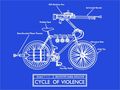 This is my 38th year of cycling. My mileage record is 6,288 miles, set in 2016. Today I tied it. I have more than seven weeks to smash it. Today's 45-mile ride puts me eight miles ahead of schedule to reach 7,300 miles for the year, which is an average of 20 miles per day. I ride; therefore, I am.
–––––––
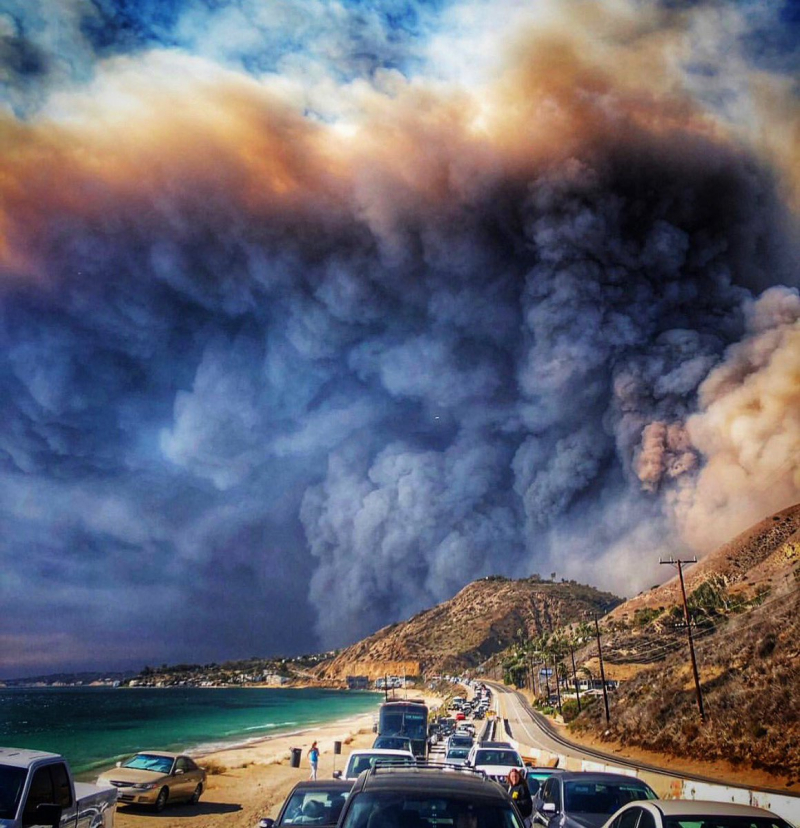
There is no reason for these massive, deadly and costly forest fires in California except that forest management is so poor. Billions of dollars are given each year, with so many lives lost, all because of gross mismanagement of the forests. Remedy now, or no more Fed payments!
— Donald J. Trump (@realDonaldTrump) November 10, 2018
–––––––
 When we think a particular possible act to be right for us to do now, but desire not to do it more than to do it, or desire more to do something inconsistent with doing it, we can choose either course.
If we do what we think wrong or fail to do what we think right we act immorally, and the guilt is in proportion to our clear consciousness of stringency in the obligation. If we do the act that we think right, and do it for that reason simply, we act morally, and the merit is in proportion to the strength of the desires resisted. Moral and immoral acts are spontaneous acts of choice: they are free in the fullest sense.
If, however, we do the act that we think right simply because we desire to do it (apart from thinking it right) more than we desire not to do it or to do anything inconsistent with doing it, I should not call the act moral. When the desire that we act upon is of a kind that usually leads to right acts, and therefore ought to be encouraged, I call it a virtuous act. When, on the other hand, the desire is of a kind that usually leads to wrong acts, and therefore ought to be discouraged, I call it, for lack of a proper name, a vicious act; though I doubt if many people would apply the term to an act which the agent thought right, however bad its motive. An example of such an act would be if I told the truth, believing that I now ought to tell it, yet not for that reason, but in order to give pain. Perhaps even an immoral act could sometimes be called virtuous; when, for instance, I do an act, which I recognize to be wrong, out of patriotism.
Again, if people do an act, thinking it right, because they desire to do right acts as such more than they desire not to do this act or than they desire to do anything inconsistent with doing it, such an act might be called saintly. In such people, reverence for the moral law has become a hunger and thirst after righteousness; and such acts are neither moral, virtuous, nor free, in the strict sense that I have given to those words. I can do an act which I think right, lastly, with no desires one way or the other; this apparently is what Kant calls a holy act and regards as characteristic of the divine will and our own noumenal wills; yet an instance would occur whenever a judge, who has absolutely no interest in either party, gives a just decision. All the acts so far described, except the immoral act, are thought right by the doer; but, so far as we have described them, all might be wrong. It is possible to suggest other kinds of act, besides the immoral act, which might be done by a man believing them to be wrong. The extreme antithesis to a holy act would be one done simply because it was believed wrong, without any desire; and as this is inconceivable I should simply call it monstrous. The correlative of a saintly act would be one done simply from the desire to do wrong as such; I do not think that this occurs outside melodrama, but it would be a satanic act. So perhaps the only acts ever done in the belief that they are wrong are immoral acts; and these may sometimes be right. Besides all these I think that there are indifferent 'acts': acts which we can recognize no obligation whatever either to do or to leave undone. The list, then, would be as follows:
I. Acts done in the belief that they are right:
(1) Holy ( = 4 but without adverse impulse or choice).
(2) Saintly.
(3) Virtuous.
(4) Moral.
(5) Vicious.
II. Acts done in the belief that they are wrong:
(6) Immoral. (Some of these might be called virtuous and some vicious.)
(7) Satanic.
(8) Monstrous.
III. Indifferent acts.
(E. F. Carritt, The Theory of Morals: An Introduction to Ethical Philosophy [London: Oxford University Press, 1928], 136-8 [italics in original])
Little Queen (1977). I heard this song on my bike ride this afternoon. It sounds as fresh today as it did 41 years ago. At 2:41, the bottom drops out.
–––––––
Here.
–––––––
Here.
–––––––
Who is paying for all these election rallies that Donald Trump is attending, using taxpayer-supported aircraft? Does he get vacation time and is he using it to fly around the country daily on these trips? An inquiring mind wants to know.
MARY LOU BURGER
Upper St. Clair
President Macron of France has just suggested that Europe build its own military in order to protect itself from the U.S., China and Russia. Very insulting, but perhaps Europe should first pay its fair share of NATO, which the U.S. subsidizes greatly!
— Donald J. Trump (@realDonaldTrump) November 9, 2018
–––––––

