
Skip to content

Keith Burgess-Jackson, J.D., Ph.D.

  • John C. Harsanyi (1920-2000)In view of the difficulties associated with act utilitarianism, the economist [R. F.] Harrod proposed a revised form of utilitarianism, now often called rule utilitarianism. (The terms 'act utilitarianism' and 'rule utilitarianism' themselves were introduced by [Richard B.] Brandt.) Harrod suggested that the utilitarian criterion should be applied in the first instance, not to each individual act, but rather to the moral rule governing this act (and to the general social practice that would result from common conformity to the relevant rule).

    Thus, an individual act should be considered to be morally right if it conforms to the correct moral rule applying to this type of situation—regardless of whether it is the act that will or will not yield the highest possible social utility on this particular occasion. On the other hand, the correct moral rule should be defined as that particular rule of behavior that would yield the highest possible social utility in the long run if it were followed by everybody in this type of situation.

    For example, in most cases it will be our moral duty to keep our promise even if breaking it would yield a higher social utility than keeping it would on that particular occasion—because in the long run society will be better off if people can confidently expect that promises will be kept in all but some rather special cases. (But even the question of what exceptions should be made to the general rule of promise keeping must be decided by asking what particular set of exceptions would maximize social utility in the long run—on the assumption that everybody would know what these permitted exceptions were.)

    Likewise, except for certain emergency situations, it is our moral duty not to steal, even if stealing would increase the social utility produced by us on that particular occasion—because in the long run society will be better off if people can confidently expect that private property will be respected except in certain emergency situations. Again, it is our moral duty not to take the lives of innocent people, even in order to achieve some very noble objectives—because in the long run society will be better off if innocent people need not fear being murdered for the purpose of achieving some very noble objectives. (It is bad enough that many societies cannot ensure reasonable safety from murder by criminals; but at least they should ensure safety from murder by people guided by the highest motives, and acting in the very name of morality.)

    The emergence of rule utilitarianism has given a new turn to the debate about the value of utilitarianism as a moral theory. If rule utilitarianism can really avoid the undesirable implications of act utilitarianism, then it may be possible after all to retain the intellectual and the practical advantages that utilitarianism seems to provide, without being forced to give up some of our deepest moral convictions and embrace a thoroughly distasteful super-Macchiavellistic morality. But, of course, rule utilitarianism cannot possibly avoid these undesirable implications unless it has a genuinely different logical content from act utilitarianism.

    (John C. Harsanyi, "Rule Utilitarianism and Decision Theory," Erkenntnis 11 [May 1977]: 25-53, at 32-3 [italics in original; parenthetical references omitted])
    John C. Harsanyi (1920-2000) on Rule Utilitarianism

    –––––––

    Feb 17
  • I hate to be a party pooper, but there's a longstanding joke going around in philosophy that rests on a confusion. I take the following version from Wikiquote (s.v. "Sidney Morgenbesser"):

    During a lecture the Oxford linguistic philosopher J. L. Austin made the claim that although a double negative in English implies a positive meaning, there is no language in which a double positive implies a negative. To which Morgenbesser responded in a dismissive tone, "Yeah, yeah."

    How is "Yeah, yeah" a negative? Whenever I've heard the expression "Yeah, yeah," it wasn't meant to deny anything but to express frustration, as in "You're boring me; I've heard this all before; get to the point." Am I missing something? Unless I am, then philosophers should retire this joke, for it makes them look stupid.

    Language

    –––––––

    Feb 17
  • Everyone should read this essay by law professor Amy Wax.

    Academentia

    –––––––

    Feb 17
  • President Donald Trump’s proposed 2019 budget is a slap in the face to low-income families in a host of ways. What got my attention is the proposal to overhaul the Supplemental Nutrition Assistance Program (SNAP), or the food-stamp program. I manage a food bank in North Seattle, and every day I see folks who are left behind in our city’s booming economy struggle to put food on the table for their children.

    For 42.2 million Americans—the majority of whom are the elderly, the disabled and the working poor—SNAP makes it possible to purchase healthy, culturally appropriate food. And every time you hear a “welfare queen” story, just know that SNAP has a minuscule 1.4 percent fraud rate. SNAP works. And programs that work deserve to be expanded, especially in these trying economic times.

    And the White House’s proposal to replace benefits with a box of canned goods and shelf-stable milk? This depressing solution only demonstrates the cruelty of the administration toward the most vulnerable.

    Casey Hobbs, Seattle

    Trump Derangement Syndrome, from Today’s Seattle Times

    –––––––

    Feb 17
  • Our entire Nation, w/one heavy heart, continues to pray for the victims & their families in Parkland, FL. To teachers, law enforcement, first responders & medical professionals who responded so bravely in the face of danger: We THANK YOU for your courage! https://t.co/3yJsrebZMG pic.twitter.com/ti791dENTy

    — Donald J. Trump (@realDonaldTrump) February 17, 2018

    https://platform.twitter.com/widgets.js

    Presidential Tweet

    –––––––

    Feb 17
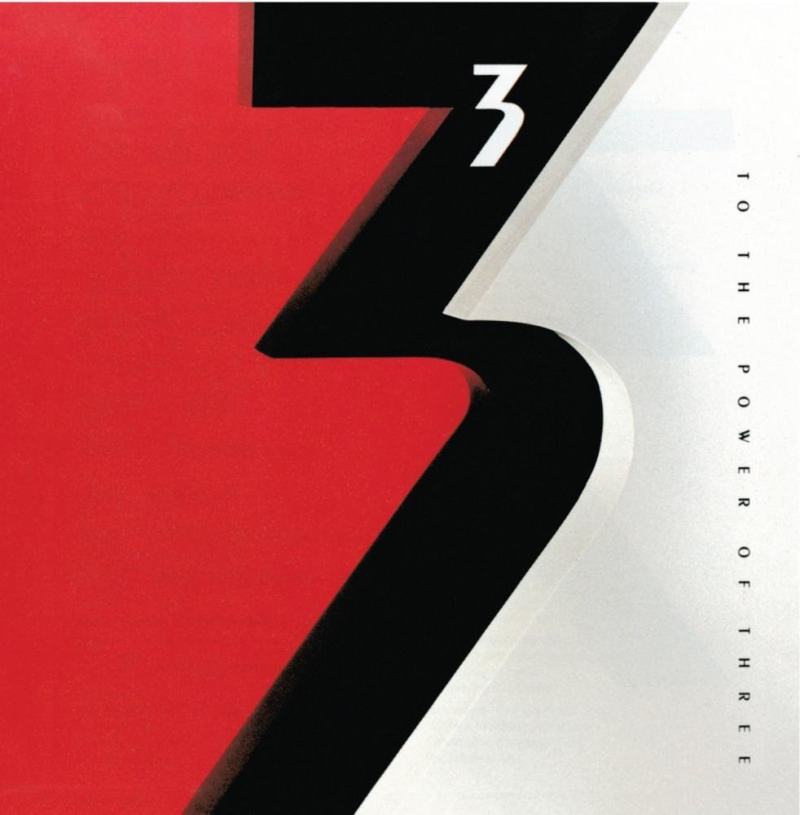
  • 3  To the Power of Three (1988)

    Now Playing

    –––––––

    Feb 16
  • The First Amendment's right to speak is not—and has never been held by the Supreme Court to be—absolute; it is prima facie. This means that it can be overridden by other, weightier considerations. Is the Second Amendment's right to keep and bear arms absolute? If not, which considerations are weighty enough to override it? Harvard law professor Cass Sunstein discusses the matter.

    Law, Part 2

    –––––––

    Feb 16
  • Here are highlights from Stage 4 of the Tour of Oman.

    Cycling

    –––––––

    Feb 16
  • Russia started their anti-US campaign in 2014, long before I announced that I would run for President. The results of the election were not impacted. The Trump campaign did nothing wrong – no collusion!

    — Donald J. Trump (@realDonaldTrump) February 16, 2018

    https://platform.twitter.com/widgets.js

    Presidential Tweet, Part 2

    –––––––

    Feb 16
  • I just read the 37-page indictment of the 13 Russians. I also listened to Deputy Attorney General Rod Rosenstein. You know that the "Russian collusion" hoax is on its last legs when all CNN can say in light of today's events is that it's still possible that President Trump colluded with the Russians. They're conceding that nothing about today's indictments implicates Trump or any Trump aide. Let it go, CNN. You're making an ass of yourself. No serious person tunes in to CNN for news. I watch it (occasionally) for entertainment, to see what hatred does to people.

    The best part of the indictment is the information that the Russians sought to help both Donald Trump and Bernie Sanders. Hilarious! This shows two things: first, that it wasn't so much about getting Trump elected as sowing discord; and second, that their efforts were ineffective (otherwise, Sanders would have been nominated, if not elected).

    Law

    –––––––

    Feb 16
Previous Page Next Page

Blog at WordPress.com.

  • Subscribe Subscribed
    Keith Burgess-Jackson, J.D., Ph.D.

    Have a WordPress.com account? Log in now.

  • Keith Burgess-Jackson, J.D., Ph.D.
    View site in Reader
    Manage subscriptionsSign upLog in
    Report this content
    Collapse this bar