Here is Kurt Schlichter's latest column.
-
-
Happy solstice, everyone! I noticed during this morning's walk with the dogs that the sun is quite low in the southern sky. Things will now begin to brighten. I'm going to be a riding machine in the next 10 days. I need 385.1 miles by 31 December to reach my goal of 6,000 miles for the year. That's an average of 38.51 miles per day for 10 straight days. Wish me luck. I'm sure there will be cold, rainy days along the way, but I have good clothing.
Solstice
–––––––
-
Go ahead, Republicans. Shut down the Russia investigation. It’s less than one year to an election, and Americans are against Trump 2-to-1.
What could possibly go wrong?
Mark Hastert
Kansas City
-
Was @foxandfriends just named the most influential show in news? You deserve it – three great people! The many Fake News Hate Shows should study your formula for success!
— Donald J. Trump (@realDonaldTrump) December 21, 2017
Presidential Tweet
–––––––
-
What, if anything, can a philosopher contribute to the topic of climate change? There are, in general, three types of question:
- Factual.
- Normative.
- Conceptual.
Philosophers, as such, have no expertise on factual questions. They are in the same position as anyone else on questions about how things are, naturally or socially. I would argue that the same is true of normative questions. I'm a philosopher and I have values, but my values have nothing to do with my being a philosopher. For those who say that philosophers are expert on normative matters, I ask, "Where in our training did we acquire the correct values?" Which course or seminar, specifically? More importantly, why do philosophers differ so much on normative matters? If philosophical training confers normative or evaluative expertise, why is there so much normative diversity among philosophers? Why would Harvard have both a John Rawls and a Robert Nozick, two men who were equally intelligent, equally serious, and equally informed, but so different on normative matters such as distributive justice?
You might reply that philosophers argue for their values. But this is no answer. Every argument with a normative conclusion must have at least one normative premise. (This is Hume's Law.) So the question is simply pushed back: Instead of asking why someone should accept a philosopher's normative conclusion, we must ask why someone should accept a philosopher's normative premise(s). That X is a philosopher gives X's values no additional weight, that is, no more weight than the values of any randomly selected person.
That leaves conceptual questions. This, I submit, is where philosophical expertise lies. Philosophers are trained to analyze concepts. The only leverage wielded by a philosopher is the principle of noncontradiction. The philosopher says, in effect, that if someone accepts proposition p, he or she cannot, on pain of contradiction, accept some other proposition, q. Or: If someone accepts proposition p, he or she is committed, logically, to accepting some other proposition, q. Philosophers, like economists, are technicians. They supply means to ends, not ends themselves.
With this in mind, let us return to the topic of climate change. Philosophers must leave the facts of climate change to the factual experts, whoever they may be. Whether the globe is warming, and if so how quickly and by how much, and to what effect on sentient life, is a matter for those who are expert on such questions. How much of global warming, if any, is attributable to human activity is another factual matter that is outside the purview of philosophy. What will happen if we do X is another matter for factual experts.
Climate change raises a host of normative questions, for example:
- Suppose the globe is warming; is that good or bad?
- If it's good, how good is it, and for whom?
- If it's bad, how bad is it, and for whom?
- For each proposed action by human beings to limit global warming, what are the costs and benefits?
- Do the benefits outweigh the costs? (That is, is the intervention worth it, all things considered?)
- How are the costs and benefits of each proposed action distributed? Are these distributions just (or fair)?
Note that distinguishing these questions from one another is itself a philosophical activity: the activity of clarification. It's a sad fact of contemporary life that factual, normative, and conceptual questions are conflated. Philosophers should be skeptical not only of scientific pronouncements about climate change, but about policy proposals offered by bureaucrats, moralists, and legislators. What one finds, sadly, is often the opposite of skepticism, namely, dogmatism. Many philosophers simply accept what they are told by scientists, without inquiring whether the pronouncements are the result of disinterested research or political partisanship. These philosophers are scientific groupies.
Suppose that 75% of climate scientists are politically progressive. Shouldn't we be skeptical of a report that there is a consensus among climate scientists that the globe is warming, or that humans are responsible for global warming? How do we know that the "consensus" is the result of disinterested research rather than, say, political partisanship or social solidarity? Maybe all the consensus shows is that most climate scientists are political progressives whose values have biased their research. No self-respecting philosopher should ever assign any normative weight to consensus. Philosophy exists precisely to counter such appeals.
Philosophers are, or should be (by virtue of their training), a bulwark against propaganda. It is disgraceful that so many of them contribute to its dissemination.
Philosophy and Climate Change
–––––––
-
Hello, I Must Be Going! (1982).
-
Here is Ann Coulter's latest column.
-
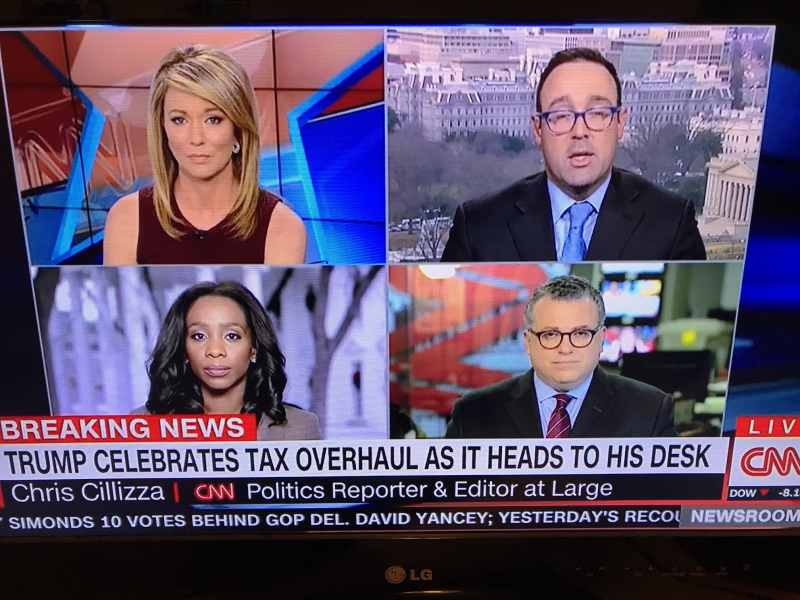
The Trump haters at CNN are not happy.
Politics, Part 3
–––––––
-
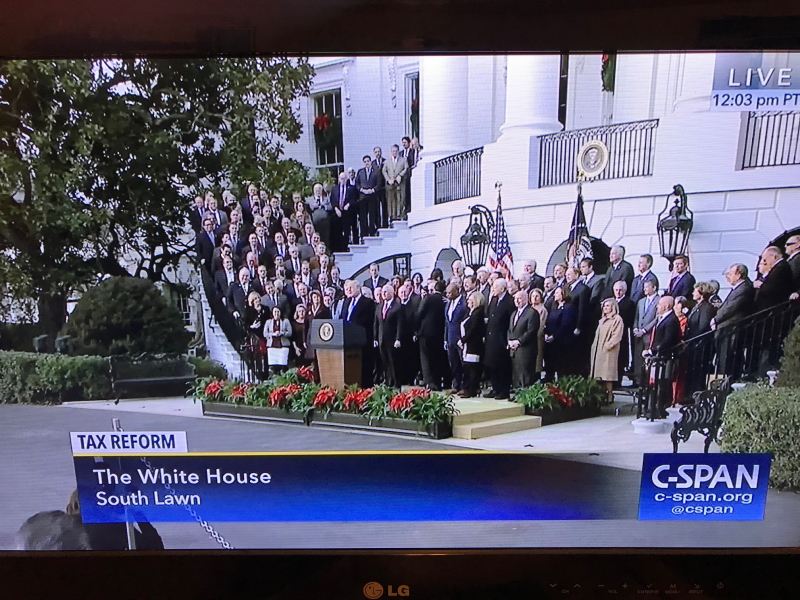
Donald Trump wins. Tax reform is done. Get used to winning, people. We're not even a year into Trump's first term. I think he will go down as one of the greatest presidents ever.
Politics, Part 2
–––––––
-
Here.
Ten Years Ago Today in This Blog
–––––––

