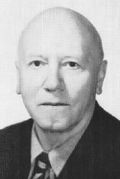
 Sidgwick's Methods of Ethics seems to me to be on the whole the best treatise on moral theory that has ever been written, and to be one of the English philosophical classics. This does not of course imply that Sidgwick was a better man or an acuter thinker than the other writers with whose theories we have been dealing; for he inherited the results of their labours, and he thus had over them an advantage of the kind which any contemporary student of mathematics or physics has over Newton and Faraday. But, even when this advantage has been discounted, Sidgwick must continue to rank extremely high. He combined deep moral earnestness with complete coolness and absence of moral fanaticism. His capacity for seeing all sides of a question and estimating their relative importance was unrivalled; his power of analysis was very great; and he never allowed the natural desire to make up one's mind on important questions to hurry him into a decision where the evidence seemed inadequate or conflicting. Those who, like the present writer, never had the privilege of meeting Sidgwick can infer from his writings, and still more from the characteristic philosophic merits of such pupils of his as M'Taggart and Moore, how acute and painstaking a thinker and how inspiring a teacher he must have been. Yet he has grave defects as a writer which have certainly detracted from his fame. His style is heavy and involved, and he seldom allowed that strong sense of humour, which is said to have made him a delightful conversationalist, to relieve the uniform dull dignity of his writing. He incessantly refines, qualifies, raises objections, answers them, and then finds further objections to the answers. Each of these objections, rebuttals, rejoinders, and surrejoinders is in itself admirable, and does infinite credit to the acuteness and candour of the author. But the reader is apt to become impatient; to lose the thread of the argument; and to rise from his desk finding that he has read a great deal with constant admiration and now remembers little or nothing. The result is that Sidgwick probably has far less influence at present than he ought to have, and less than many writers, such as Bradley, who were as superior to him in literary style as he was to them in ethical and philosophical acumen. Even a thoroughly second-rate thinker like T. H. Green, by diffusing a grateful and comforting aroma of ethical "uplift" , has probably made far more undergraduates into prigs than Sidgwick will ever make into philosophers. If I can give in my own words an intelligible critical account of Sidgwick's main argument, which will induce some people to read or re-read the Methods of Ethics and will furnish them with a guide to it, I shall have done a useful bit of work. They will then be able to study at leisure and without confusion the admirable details, and to fill in those lights and shades which are so important and so characteristic of Sidgwick but are necessarily omitted in the sketch which I offer them.
(C. D. Broad, Five Types of Ethical Theory [London and Henley: Routledge & Kegan Paul, 1930], 143-4)

