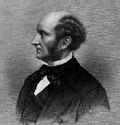
 After the completion of the book on Hamilton, I applied myself to a task which a variety of reasons seemed to render specially incumbent upon me; that of giving an account, and forming an estimate, of the doctrines of Auguste Comte. I had contributed more than any one else to make his speculations known in England. In consequence chiefly of what I had said of him in my Logic, he had readers and admirers among thoughtful men on this side of the Channel at a time when his name had not yet in France emerged from obscurity. So unknown and unappreciated was he at the time when my Logic was written and published, that to criticize his weak points might well appear superfluous, while it was a duty to give as much publicity as one could to the important contributions he had made to philosophic thought. At the time, however, at which I have now arrived, this state of affairs had entirely changed. His name, at least, was known almost universally, and the general character of his doctrines very widely. He had taken his place in the estimation both of friends and opponents, as one of the conspicuous figures in the thought of the age. The better parts of his speculations had made great progress in working their way into those minds, which, by their previous culture and tendencies, were fitted to receive them: under cover of those better parts those of a worse character, greatly developed and added to in his later writings, had also made some way, having obtained active and enthusiastic adherents, some of them of no inconsiderable personal merit, in England, France, and other countries. These causes not only made it desirable that some one should undertake the task of sifting what is good from what is bad in M. Comte’s speculations, but seemed to impose on myself in particular a special obligation to make the attempt. This I accordingly did in two Essays, published in successive numbers of the Westminster Review, and reprinted in a small volume under the title “Auguste Comte and Positivism.”
Note from KBJ: Having built Comte up, Mill felt compelled to bring him down. This may seem mean-spirited, but Mill can be charitably interpreted as trying to do justice to Comte. Doing justice means apportioning happiness to merit. Put differently, it means praising in proportion to praiseworthiness and blaming in proportion to blameworthiness.

