 The dissent says that when the Framers “constitutionalized the right to free speech in the First Amendment, it was the free speech of individual Americans that they had in mind.” Post, at 37. That is no doubt true. All the provisions of the Bill of Rights set forth the rights of individual men and women—not, for example, of trees or polar bears. But the individual person’s right to speak includes the right to speak in association with other individual persons. Surely the dissent does not believe that speech by the Republican Party or the Democratic Party can be censored because it is not the speech of “an individual American.” It is the speech of many individual Americans, who have associated in a common cause, giving the leadership of the party the right to speak on their behalf. The association of individuals in a business corporation is no different—or at least it cannot be denied the right to speak on the simplistic ground that it is not “an individual American.”
But to return to, and summarize, my principal point, which is the conformity of today’s opinion with the original meaning of the First Amendment. The Amendment is written in terms of “speech,” not speakers. Its text offers no foothold for excluding any category of speaker, from single individuals to partnerships of individuals, to unincorporated associations of individuals, to incorporated associations of individuals—and the dissent offers no evidence about the original meaning of the text to support any such exclusion. We are therefore simply left with the question whether the speech at issue in this case is “speech” covered by the First Amendment. No one says otherwise. A documentary film critical of a potential Presidential candidate is core political speech, and its nature as such does not change simply because it was funded by a corporation. Nor does the character of that funding produce any reduction whatever in the “inherent worth of the speech” and “its capacity for informing the public,” First Nat. Bank of Boston v. Bellotti, 435 U. S. 765, 777 (1978). Indeed, to exclude or impede corporate speech is to muzzle the principal agents of the modern free economy. We should celebrate rather than condemn the addition of this speech to the public debate.
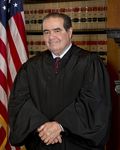
(Antonin Scalia, Concurring, Citizens United v. Federal Election Commission, 558 U.S. 310 [2010] [italics in original; footnote omitted])

