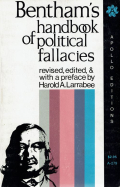
 Reason in Bentham's day was something to be used primarily for the purpose of unmasking the bad thinking of others. He would have his fellow-men ever on the alert against being deceived by the clever sophistries of others, and his warnings are still worthy of the closest attention. But citizens today have been made conscious, as Bentham never was, of the more insidious dangers of deceiving themselves. And so, while many of them continue to share his burning indignation at the fallacies uttered by designing men, they smile at the naïve way in which his "love of mankind and an admiration of himself went hand in hand."
Bentham, in other words, was much too sure that he was always on the side of the angels, and that his opponents were plagued by evil motives rather than by apathy and ignorance. But at any rate his position on the relationship between logic and morals, unlike that of many of our contemporary social scientists, was perfectly clear. He was convinced by experience that there was a high correlation between political wickedness and bad logic: the slipshod thinker was probably up to no good morally, and the rascal in politics was almost sure to unmask himself by resorting to logical trickery. It was that conviction which lent force and vigor to his crusading exposure of political fallacies, and also deprived it of the objectivity of modern propaganda analysis.
(Harold A. Larrabee, editor's preface to Bentham's Handbook of Political Fallacies, by Jeremy Bentham [New York: Thomas Y. Crowell Company, 1952; Apollo ed., 1971], ix-x)

