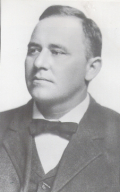
 It must be considered that the campaign was an Indian hunt, and Custer rightly thought that the best plan was to strike the Indians in their village and break them up. . . . I think his only mistake, considering the knowledge he had of the Indians, was in planning to attack the village in detail instead of in one body with all available men besides those necessary to take care of the pack train. The question as to whether Custer was to attack or not, the order was left to Custer's judgment. Custer used his judgment. How then did he disobey? At the most he could have been charged with nothing more than bad judgment—never with disobedience.
Of course Terry could not give Custer full swing and still take the responsibility, so he worded his order to correspond to that idea. To me the order seems to convey the following instructions: Custer, go ahead, use your best judgment. I think you had better do so and so, but if you think best, you may do differently, and, of course, you take the responsibility.
(Walter Camp, "Terry's Order," in Custer in '76: Walter Camp's Notes on the Custer Fight, ed. Kenneth Hammer [Norman: University of Oklahoma Press, 1990], 259-63, at 262 [ellipsis in original])
Note from KBJ: One of the things philosophers do is interpret texts. Camp is interpreting General Alfred Terry's written order to Lieutenant Colonel George Armstrong Custer.

