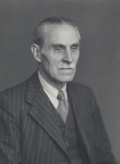
 The special function of the philosopher, as I understand it, is, in the first place, to try to extract from the way in which people talk and act the assumptions that in fact they are working on. He has then to develop them, to show their implications, their relations of compatibility or incompatibility with other views, their consequences, and so on. Thus the philosopher can help to make clear the nature of the possible alternatives. But the final choice between them must, in the last resort, be taken by each individual, including the philosopher, for himself.
(G. C. Field, Principles & Ideals in Politics, L. T. Hobhouse Memorial Trust Lecture No. 18 [London: Geoffrey Cumberlege, Oxford University Press, 1948], 27-8, reprinted in Hobhouse Memorial Lectures 1941-1950 [London: Geoffrey Cumberlege, Oxford University Press, 1952] [lecture delivered on 25 May 1948])

