Here.
-
Ten Years Ago Today in This Blog
–––––––
-
Here.
Dilbert
–––––––
-
 Let's assume, for the sake of discussion, that philosophy majors do better than other majors on standardized tests (such as the LSAT). What might account for this? The American Philosophical Association (APA) strongly implies that the causal arrow goes from (1) studying philosophy to (2) doing well on standardized tests. I have long argued that it's just as likely (if not more likely) that analytically minded students (those who are already likely to do well on standardized tests) are attracted to philosophy, which rewards such skills.
Maybe it's a little of both. Here's an analogy. I suspect that the Southeastern Conference (SEC) has a higher percentage than other conferences of National Football League (NFL) players. (Here is confirmation.) Why might this be? Isn't it plausible that the SEC attracts better players, and also that playing in the SEC improves their skills so as to increase the likelihood that they'll make it to the NFL? The APA answer would be that playing in the SEC causes one to make it to the NFL, which ignores the fact that the SEC recruits the best players in the country.
What say you? Is this a good analogy?
Academia
–––––––
-
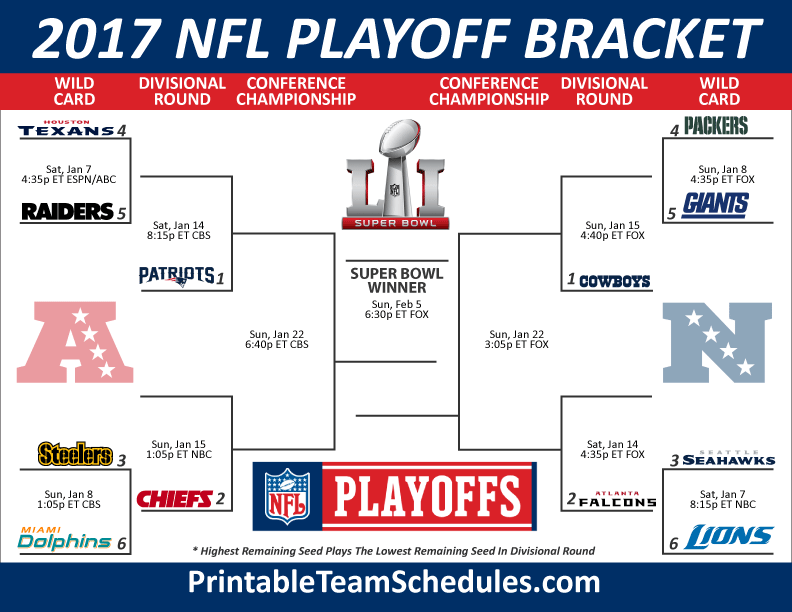
Make your prediction. I’m going with America’s Team.
Football
–––––––
-
Nuthin' Fancy (1975). The year of my high-school graduation.
-
To the editor:
I was educated to believe that we are all rational beings. Present me with information, and I can use it to make a rational decision.
Over the last 30 years, researchers have shown that the “rational man” theory of how we act is not complete. Behavioral economics has challenged our way of interpreting how people process economic information. Much of the time we don't make decisions rationally; rather, we make decisions emotionally and then use reason to back them up.
Politically and socially we now have the means to satisfy our emotional decision needs. With a quick Internet search we can find an article to match any conclusion we want to believe. The chosen article could be true or false; it does not matter. On Facebook, we might feel right at home agreeing with all the others who have a like mind.
We are becoming tribal, and that is not a good thing. Look at tribal societies around the world and tell me which one is succeeding as a nation.
Carl Jerris, El Cajon
Note from KBJ: The worst tribalists are progressives, many of whom (by all indications) read only the New York Times, Washington Post, Los Angeles Times, and New York Review of Books, listen only to National Public Radio, and watch only PBS, MSNBC, CNN, NBC, ABC, and CBS. In other words, they live in a progressive echo chamber. The conservatives I know are much more knowledgeable about ideologies other than their own, in part because they once adhered to other ideologies. I am a case in point, having been, at various times, a liberal, a libertarian, an anarchist, a feminist, an egalitarian, and a progressive. If all you know is progressivism, then you know very little indeed.
From Today’s New York Times
–––––––
-
Here.
Ten Years Ago Today in This Blog
–––––––
-
Here.
Dilbert
–––––––
-

Two More Weeks
–––––––
-
To the Editor:
While no country wants foreign powers interfering in its election processes, there is another issue that has been smothered in the brouhaha over Russian activities. There have been no allegations that whatever may have been hacked and leaked was false, made up or doctored by the Russians or anyone else. Therefore, the hacking did not mislead voters, but rather informed them of things that Hillary Clinton’s team would rather have remained unexposed.
ROBERT LONERGAN
Easton, Md.
Note from KBJ: Exactly. Try to imagine someone who was going to vote for Hillary Clinton, but decided not to upon reading John Podesta's e-mails. Neither can I. There is no issue here. Go back to what you were doing. The only people trying to get mileage out of this are (1) people who hate Donald Trump and (2) people who benefit from drumming up hatred against Donald Trump.
From Today’s New York Times
–––––––

