Watercolors (1977).
-
Pat Metheny, “Sea Song” (1977)
–––––––
-
 If a doubt is raised about a moral norm long accepted in any community, the presumption is not on the side of freedom from obligation. Rather it is on the side of tradition, since like a reasonable person, a reasonable community must accept what it is (which includes what it has been) and it will change only when it sees an adequate reason for change. Moreover, the presumption is on the side of the basic human goods, since when any one of them is at stake, the action which seems contrary to it is prima facie immoral. Thus for anyone who rightly recognizes the initiation of new human life to be a basic human good, the burden of proof in the present controversy will appear to fall on the defenders of contraception, just as for anyone who regards human life itself as a basic good, the burden of proof in the justification of warfare falls on those who seek to justify it.
(Germain G. Grisez, "Reflections on the Contraception Controversy," The American Ecclesiastical Review 152 [May 1965]: 324-32, at 330)
-
To the Editor:
Re “Stop Killing Coyotes” (Op-Ed, Aug. 11): Dan Flores asks why we target coyotes for elimination when they “pose no unique or overwhelming danger.”
In the Phoenix metro area, where I live, coyotes hunt in packs, scaling six-foot walls and preying on our innocent pets, which have a right to enjoy their owners’ yards and gardens. Over the years I have suffered four devastating attacks on my dogs by coyotes that entered my property despite every safeguard to keep them out.
Mr. Flores should look at pictures of what coyotes have done to babies left sleeping in their own gardens. Defending the spread of dangerous predators in cities is completely misguided. Arguments that coyotes have rights, too, ignore our right to protect our property.
Coyotes are as dangerous as the alligator that killed a child in Florida recently. Steps should be taken to protect human beings before coyotes.
KEN VEIT
Phoenix
From Today’s New York Times
–––––––
-
Gee, ya think?
Marijuana
–––––––
-
They lie; therefore, they are.
Politics, Part 2
–––––––
-
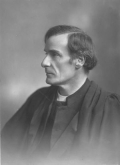 Rational and a priori theology stands or falls with the ontological argument; and if that argument—or some substitute for it, alleged to express its intent—still seems self-evidently cogent to a philosopher here and there, its fallaciousness is self-evident to all the rest. Natural theology, on the other hand, sets out from facts and inductions; its premisses are as firmly established and as universally acknowledged as any of the stable generalisations of science. Here there is at least common ground, as distinct from private certitude, from which argumentation may proceed. Coercive demonstration being confessedly unattainable, it is to be inquired what kind of justification for reasonable belief natural theology can afford. And the first step is to set forth the facts and generalisations which collectively constitute our data or premisses.
The forcibleness of Nature's suggestion that she is the outcome of intelligent design lies not in particular cases of adaptedness in the world, nor even in the multiplicity of them. It is conceivable that every such instance may individually admit of explanation in terms of proximate causes or, in the first instance, of explanation other than in terms of cosmic or 'external' teleology. And if it also admits of teleological interpretation, that fact will not of itself constitute a rigorous certification of external design. The forcibleness of the world's appeal consists rather in the conspiration of innumerable causes to produce, by their united and reciprocal action, and to maintain, a general order of Nature. Narrower kinds of teleological argument, based on surveys of restricted spheres of fact, are much more precarious than that for which the name of 'the wider teleology' may be appropriated in that the comprehensive design-argument is the outcome of synopsis or conspection of the knowable world.
(F. R. Tennant, Philosophical Theology, vol. 2, The World, the Soul, and God [Cambridge: Cambridge University Press, 1930], 79)
-
This is looking really stupid right about now.
Politics
–––––––
-
Here.
Ten Years Ago Today in This Blog
–––––––
-
Here.
Dilbert
–––––––
-
Keith's Law at work. (For those of you who are new to this blog, Keith's Law [named after yours truly] says that authoritativeness is inversely proportional to partisanship.)
Journalism
–––––––

