Here.
-
Ten Years Ago Today in This Blog
–––––––
-
Here.
Dilbert
–––––––
-
Live and Beyond (2000).
-
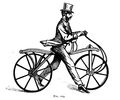 My cycling year is off to a great start. I rode 14 times in January (including today), for a total of 478.7 miles. The temperature was 69º when I left the house and 73º when I returned, with glorious sunshine the entire time. The trail was crowded with cyclists, runners, walkers, and skaters, but somehow I managed to average 17.43 miles per hour for 34.22 miles. My personal record on this course is 17.45 miles per hour, so I'm pleased. I did my final bike rally in June 2014. Since then, I have done all of my riding alone: 7,742.6 miles. I'm having the time of my life.
Roto Ergo Sum
–––––––
-
To the Editor:
The sole standard for an Academy Award nomination should always be the quality of the artistic performance or film. The color of the performers’ or producers’ skin should not enter into their selection, and it would detract from that standard were the Academy to consider diversity as a factor.
In the past black actors, directors, producers and craftsmen have been deservedly nominated for and won Oscars, not, as the Rev. Dr. Martin Luther King Jr. proclaimed, “judged by the color of their skin,” but for their artistic achievements. No one protested those results. To protest now because the Academy members, the vast majority of whom are white, nominated only white people for acting awards is offensive to the integrity of those members.
PAUL FROHMAN
Bronx
Note from KBJ: I have a better idea. Get rid of these self-congratulatory events, the theme of which is, "Aren't we great?"
From Today’s New York Times
–––––––
-

Latest Iowa Poll
–––––––
-
 Philosophers put forward moral theories in order to provide clear, coherent, and comprehensive descriptions of morality and its justification. No philosopher would accept the view that his theory provides incorrect answers to some moral questions, even if it is granted that it provides correct answers to most others. Almost all moral theories, on the standard interpretations, provide correct answers to most noncontroversial moral questions. However, if a moral theory gives an incorrect answer to any noncontroversial moral question, it cannot be trusted to give a correct answer to any controversial moral question. To claim that a moral theory gives an incorrect answer to any moral problem [sic; should be "question"] is to reject that theory or, at least, to require that it be revised.
(Bernard Gert, Common Morality: Deciding What to Do [New York: Oxford University Press, 2004], viii)
Note from KBJ: I have a different conception of moral theory, or what I call normative ethical theory. The point of a normative ethical theory, such as theological voluntarism, natural law, or act-utilitarianism, is to systematize one's beliefs. A normative ethical theory states a necessary and sufficient condition for moral rightness (understood as permissibility). To a theological voluntarist, for example, an act is right if and only if it conforms to God's will. To an act-utilitarian, an act is right if and only if it maximizes happiness. In propounding a theory, I express my own commitment to the theory and submit it to others for their consideration. I suppose someone could interpret this process as getting the truth about moral rightness, but it's not necessary to view it that way. (I'm a subjectivist about value.) If someone points out that my theory has an unacceptable implication, I have three options: (1) I can abandon the theory (not likely!); (2) I can deny that my theory has the stated implication (this is known as grasping the bull by the horn); and (3) I can admit that my theory has the stated implication but accept it (this is known as biting the bullet). This process of theorizing, objecting, and replying, which can be carried out at a high level, helps to sharpen the theory, which in turn helps people understand precisely what it is that they are accepting when they accept it.
-
The Song Remains the Same (1976).
-
Here.
Ten Years Ago Today in This Blog
–––––––
-
Here.
Dilbert
–––––––

