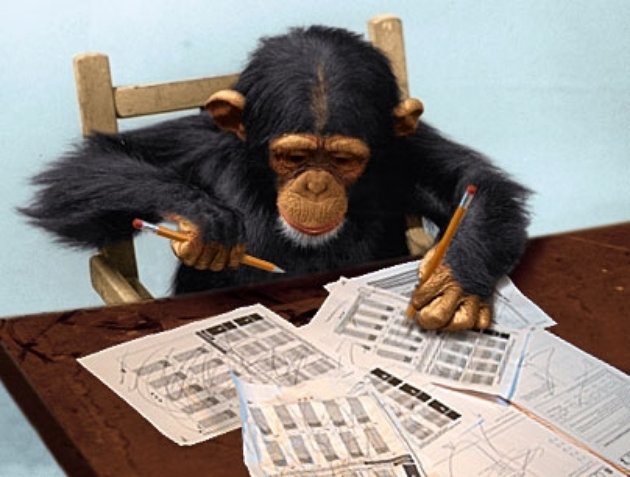
Feel free to supply your own caption.
Feel free to supply your own caption.
To the Editor:
Re “Union Setback Looms in Suit Before Justices” (front page, Jan. 12):
Without the hoped-for support of Justice Antonin Scalia, who you report was “consistently hostile” at last week’s hearing, the conservative majority on the Supreme Court seems ready to deal a major blow to the union movement.
Animus toward unions, both public and private, is encoded in conservative ideology: Unions are seen as an assault on the rights of private ownership. Workers are “human resources” in the strictest sense of the term, a resource like raw material or infrastructure.
Overturning the 1977 Abood decision, which upheld the requirement that nonunion members in a union shop must pay the equivalent of union dues, along with the powerful right-to-work (anti-union) movement, will drastically weaken an important avenue to the middle class for millions of Americans.
STEVEN BERKOWITZ
New York
Note from KBJ: Please. If unions are so good for workers, then the workers should be happy to pay dues. This court case is about liberating workers from union bosses. Why is the "right to chose" prized when it comes to abortion, but despised when it comes to joining a union?
–––––––

That's Fort Mackinac in the center of the image, on the bluffs. Click to enlarge.
–––––––
 The very fabric of the ethics of the actual, historical Aristotle, like that of his physics, is deeply imbued with a teleological conception of the world, in which each natural thing can be explained in terms of its final cause—the 'that for the sake of which'. Fact and value are inextricably intertwined here: the good for the acorn is to realise its potentialities, to grow into the healthy and flourishing oak-tree which represents the end-state towards which its nature tends. And so, mutatis mutandis, for human beings.
(John Cottingham, "The Ethical Credentials of Partiality," The Presidential Address, Proceedings of the Aristotelian Society, n.s., 98 [1997-98]: 1-21, at 14)
Love Deluxe (1992).
Here.
–––––––
Here.
–––––––
To the Editor:
When the government gets finished satisfying Judith Shulevitz’s proposal for paying women for being mothers, it can deal with back pay for all the millions of men who were pressed into military service. America’s most egregious form of gender discrimination was the draft. The pay was poor, the food was often bad and the housing was substandard. At times your job involved killing or being killed.
The vestiges of this inequality are alive and well today. Only young men are required to register for the draft, a reminder that someday they too might be dragged off to fight in yet another foreign war.
JAMES F. McMANUS
Phoenix
–––––––
 Laws proper, or properly so called, are commands; laws which are not commands, are laws improper or improperly so called. Laws properly so called, with laws improperly so called, may be aptly divided into the four following kinds.
1. The divine laws, or the laws of God: that is to say, the laws which are set by God to his human creatures.
2. Positive laws: that is to say, laws which are simply and strictly so called, and which form the appropriate matter of general and particular jurisprudence.
3. Positive morality, rules of positive morality, or positive moral rules.
4. Laws metaphorical or figurative, or merely metaphorical or figurative.
(John Austin, The Province of Jurisprudence Determined, in The Province of Jurisprudence Determined and The Uses of the Study of Jurisprudence [Indianapolis: Hackett Publishing Company, 1998 (book first published in 1832)], 1)
–––––––

