The Left doesn't give a damn about individuals. It cares about abstractions, including the abstractions known as "workers," "the poor," "the disadvantaged," "the oppressed," and "art." Read this. The editorial board of the New York Times cares more about antiquities than it does about living, breathing human beings, especially if they're Christians. It's sick, but that's the Left.
-
Muslim Terrorism
–––––––
-
 I just watched Donald Trump's press conference and speech in Dubuque, Iowa. Wow. Something profound is happening in this country. We're in the midst of it, so it's hard to see. Trump is single-handedly reshaping American politics. I keep hearing it said, by way of criticism, that Trump is not a conservative, or not a Republican. Why is that a problem? Many people who do not think of themselves as conservatives or Republicans are attracted to Trump's message, which transcends race, sex, religion, party affiliation, and ideology. I picture working-class Democrats flocking to the polls to vote for Trump in November 2016. He believes in America; he thinks we can be great again (with proper leadership); he knows how to negotiate; he doesn't tolerate insults or thuggery (such as we saw this evening with Jorge Ramos); he's unscripted and fresh. I know I've called Trump a buffoon in this blog. I was wrong. I now think he's five steps ahead of everyone else. Get used to saying "President Trump."
Politics
–––––––
-
It's open season on drones!
Privacy
–––––––
-
Here.
Ten Years Ago Today in This Blog
–––––––
-
Here.
Dilbert
–––––––
-
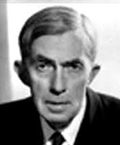 A word about method. There is in existence a great body of opinion about moral questions. I conceive it to be the task of the moral philosopher to determine and explain the subject matter of that body of opinion. This is in accordance with Aristotle's teaching that moral philosophers should concern themselves with δόξαι [common belief, popular opinion]. It is not enough to erect an abstract system of thought. It is required that the system should make sense of what may be called the common moral consciousness. There are, no doubt, serious difficulties. Moral opinion comprises many elements of dogmatism, survivals of the past, and prejudices due to the accidents of history. Moreover most men are content to remain in a condition of incomplete clarity. In resorting to a process of cross-examination with a view to isolating and elucidating what is essential and what makes sense in common moral thought, one is often perforce driven to a self-examination consisting in an effort to think very clearly about the matter oneself. But there is all the difference between attempting to re-interpret in clear terms the essential nature of the δόξαι and constructing an arbitrary system de novo.
(R. F. Harrod, "Utilitarianism Revised," Mind, n.s., 45 [April 1936]: 137-56, at 137-8)
-
You will be unusually successful in business.
Fortune Cookie
–––––––
-
Holy Smoke (1992).
-
To the Editor:
Paul Krugman claims that “Social Security does not face a financial crisis; its long-term funding shortfall could easily be closed with modest increases in revenue.”
The reality is that Social Security faces very serious financial challenges, and its own trustees estimate that its deficits will lead to trust fund insolvency by 2034—resulting in a 21 percent across-the-board cut to all retirees. This will indeed be a crisis to the tens of millions of Americans who rely on the program if we don’t act quickly.
Furthermore, while revenue must be part of the discussion, closing Social Security’s long-term funding shortfall exclusively through tax revenues would require raising the payroll tax by 20 to 35 percent—hardly “modest.”
If we aren’t even willing to acknowledge the magnitude of the challenges facing Social Security, how are we ever going to fix it?
JUDD GREGG
Washington
The writer, a former Republican senator from New Hampshire, is co-chairman of the Campaign to Fix the Debt.
From Today’s New York Times
–––––––
-
Or is it food?
Art
–––––––

