This blog had 6,181 visits during June, which is an average of 206.0 visits per day. A year ago, the average was 176.4.
-
Statistics
–––––––
-
To the Editor:
Re “Justices Approve Execution Drug in a 5-to-4 Vote” (front page, June 30):
Our system of capital punishment is racist, expensive and geographically inconsistent. And every once in a while, we condemn innocent people to death row.
Yes, the crimes before us are heinous. Yes, we want the perpetrators to suffer in proportion to the suffering they caused—that’s very understandable. The problem is that the system doesn’t work. It never will.
Why? Because human beings make mistakes, and sometimes these mistakes are just as heinous as the original horrors, or even more so because they bear the label of justice.
DAWN O’LEARY
Portland, Ore.
Note from KBJ: Most arguments against capital punishment, including this one, are actually arguments against punishment. Since it's absurd to think that we can (or should) dispense with punishment, the arguments accomplish nothing. Many people who oppose capital punishment say that death, of all punishments, is special. Okay; then you should be willing to support any punishment as long as the perpetrator is allowed to live. This includes life imprisonment in solitary confinement, life imprisonment with hard labor, life imprisonment without the possibility of parole, daily torture, and so on. If capital punishment is ever deemed unconstitutional, you can be sure that abolitionists will move on to the next-harshest punishment, such as life imprisonment with hard labor, and then the next, such as life imprisonment without parole, and then the next, such as solitary confinement. What these people really want is not an end to capital punishment, but an end to harsh treatment. It will be the death of us all.
From Today’s New York Times
–––––––
-
Live (1975). This song is 40 years old and still blows my mind. I'm glad someone finally posted it on YouTube, so I can share it with you.
-
Here.
Ten Years Ago Today in This Blog
–––––––
-
Here.
Dilbert
–––––––
-
To the Editor:
Re “‘Equal Dignity’: 5-4 Ruling Makes Same-Sex Marriage a Right Nationwide” (front page, June 27):
Chief Justice John G. Roberts Jr.’s dissent asks of his colleagues, “Just who do we think we are?”
As someone directly affected by the marriage ruling, I would like to tell the chief justice who I am. I am a 64-year-old American. I am a seminary graduate and law school dean of students. I am a taxpayer and a voter. I am the husband of the man I met and fell in love with 42 years ago.
I am a believer in America’s promise and ideals. I am one of the countless gay and lesbian Americans who have waited in hope that one day our country would recognize the simple fact that we are deserving of equality under the law.
That’s who I am, Chief Justice Roberts. Who are you?
Philadelphia
Note from KBJ: How do you get to be a law-school professor, much less a dean, when you can't even read? Here is what Chief Justice Roberts said, in context:
The majority’s decision is an act of will, not legal judgment. The right it announces has no basis in the Constitution or this Court’s precedent. The majority expressly disclaims judicial “caution” and omits even a pretense of humility, openly relying on its desire to remake society according to its own “new insight” into the “nature of injustice.” Ante, at 11, 23. As a result, the Court invalidates the marriage laws of more than half the States and orders the transformation of a social institution that has formed the basis of human society for millennia, for the Kalahari Bushmen and the Han Chinese, the Carthaginians and the Aztecs. Just who do we think we are? (boldface added)
Shorter Roberts: "We, the justices of the Supreme Court, are unelected and unaccountable to the people. Who do we think we are, legislators?" Gary Clinton is a homosexual first and a law professor second.
From Today’s New York Times
–––––––
-
Here.
Ten Years Ago Today in This Blog
–––––––
-
Here.
Dilbert
–––––––
-
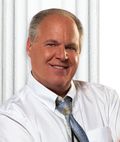 Rush Limbaugh coined a new term today, almost certainly unwittingly. He used the term "full-frontal attack" while talking about progressivism's attempts to change our culture. (For some reason, Limbaugh calls his opponents liberals, when in fact they're progressives. The real liberals today are conservatives.) The adjective "full-frontal" comes from television and movies, as in "Clint Eastwood's new movie has full-frontal nudity." It means that the actress in question has nothing covering her breasts or pubic area. (Toplessness is not full-frontal nudity; it is partial-frontal nudity.) The term "frontal attack" comes from the military. As the name implies, it is an attack on an enemy's front as opposed to the enemy's flank or rear. I got a kick out of this, so I thought I'd share it with you.
Language
–––––––
-
To the Editor:
Re “What’s the Matter With Polling?,” by Cliff Zukin (Sunday Review, June 21):
Journalists should not try to pick winners and losers. That’s the job of voters.
Surveys can be useful for gauging what voters care about. But using them to predict elections has become a reckless addiction. Let’s get off them. Consumers of journalism can help. Every time you read, listen to or click on a predictive political story, you enable the angels of our lesser nature. So just say no to horse-race coverage and we will get better.
But there is a bigger lesson. Pollsters are having a harder time predicting elections because they can’t figure out who is likely to vote. No doubt there are methodological challenges. But the core problem is that shocking numbers of Americans don’t exercise their franchise.
Finding who will vote isn’t quite like finding a needle in a haystack. But when little more than one eligible citizen in three actually votes (as in the 2014 midterm election), we have more than a crisis in polling.
Low participation is worsening polarization, contributing to gridlock and undercutting the legitimacy of the system. Fixing polling is the least of our problems. Fixing our democracy by re-engaging its constituents is the real challenge.
MICHAEL ORESKES
Washington
The writer is editorial director and senior vice president for news at NPR and a former national political correspondent and Washington bureau chief of The New York Times.
From Today’s New York Times
–––––––

