Here.
-
Dilbert
–––––––
-
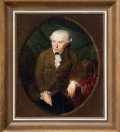 At the very outset, it should be observed that, as a person, Kant was not the crusty old bachelor and Puritanical, ascetic, humorless prude that utilitarians and others have usually assumed him to have been. The historical records show that, in fact, he was quite the opposite. He always dressed elegantly in fashionable and stylish clothes; according to one account he wore a brown suit with a yellow vest, a white powdered wig, and a little three cornered hat; like all gentlemen of the time, he always wore a dagger as part of his daily dress. He was very sociable and was much sought after as a guest at the parties of the nobility on account of his entertaining and lively conversation. He was a raconteur of note; his repertoire included Yiddish stories, for he could speak Yiddish, although he was not Jewish. Indeed, one of his contemporaries write [sic] of him that he was very talented but would not amount to much because he spent so much time going to parties. There are many stories about Kant's social life, but what I have already mentioned should suffice to show that he was by no means a stuffed shirt or a recluse!
During the 60's, before he gained tenure as a Professor, Kant had an extraordinarily heavy teaching schedule. The least number of hours a week that he taught was 16; some semesters he taught as many as 28 hours. The subjects he lectured on were wide ranging: in 1761, for example, he taught logic, mechanics, theoretical physics, metaphysics, physical geography, arithmetic, geometry, and trigonometry; in addition, twice a week he conducted what were called disputatoria and he gave extra hours of special sessions for reviewing and solving problems and doubts. Later he added courses on minerology, pedagogics, natural theology, and natural law. All the while, he was turning out philosophical writings that had already brought him fame in the academic world some fifteen or twenty years before the appearance of the Critique of Pure Reason in 1781—two hundred years ago last year.
It is interesting to note, however, that when he finally received tenure as a Professor in 1770, it was given to him principally on the basis of his excellent teaching. He deserved it "on account of his record of assiduous and painstakingly prepared courses of lectures at the University in question." By all accounts, he was a popular lecturer. This is evidenced by the fact that after he gave his last lecture in 1797, his students gathered together and marched with a band of musicians to his home to honor him, making speeches praising him and reading a poem that had been specially written for the occasion. In it they described him as the greatest mind on earth and compared him to Plato and Newton. The local newspaper emphatically reported the event as more moving than any other similar occasion had ever been in the past.
(John Ladd, "Kant as a Teacher," Teaching Philosophy 5 [January 1982]: 1-9, at 2 [parenthetical reference omitted])
-
Here are highlights from Stage 10 of the Giro d'Italia.
Cycling
–––––––
-
 Yesterday evening, Katherine and I watched Grown Ups (2010) on DVD. Many of the actors were on Saturday Night Live before that show became politicized (and therefore insufferable). I enjoyed the movie, though there was nothing remarkable (or memorable) about it. Sometimes it's enough to have good, clean fun.
Here is the trailer.
Film
–––––––
-
We have a president with no knowledge of foreign policy, who doesn’t wish to learn. He shoots from the hip and acts like a tough guy, though he has no real convictions of his own and is easily misled by the people around him.
Neocons in the White House and in Israel are trying to scare us with outdated and distorted intelligence. They believe one more war in the Middle East will bring peace and democracy to the region—and they’ll do whatever they can to make it happen.
They tell us to ignore anyone who disagrees with them, such as our European allies and international inspectors. They tell us a country that no longer has a nuclear weapons program is an uncontainable threat.
Iraq in 2003. Iran in 2018.
It’s deja vu all over again.
— Mike Mosser, Chicago
-
Can you believe that with all of the made up, unsourced stories I get from the Fake News Media, together with the $10,000,000 Russian Witch Hunt (there is no Collusion), I now have my best Poll Numbers in a year. Much of the Media may be corrupt, but the People truly get it!
— Donald J. Trump (@realDonaldTrump) May 15, 2018
Presidential Tweet
–––––––
-
Danger Money (1979).
U.K., “Rendezvous 6:02” (1979)
–––––––
-
Here.
Ten Years Ago Today in This Blog
–––––––
-
Here.
Dilbert
–––––––
-
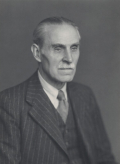 We are always making assumptions, without knowing that we are doing so, and arguing from them. And this fact is responsible for half the error and half the misunderstanding of each other which ever takes place. It is the work of Philosophy to produce the attitude of mind which makes us detect these assumptions, drag them out into the light of day, and put them on their trial. And it is as doing this that some admixture of Philosophy in any system of education must seem to those who accept this view of it, not only valuable but essential to right thinking and the understanding of the world and of each other.
(G. C. Field, What Is Philosophy? A Public Lecture Delivered at the University of Liverpool [Liverpool: The University Press, 1920], 28-9)

