-
What I’m Reading
–––––––
-
Our high level delegation is on the way back from China where they had long meetings with Chinese leaders and business representatives. We will be meeting tomorrow to determine the results, but it is hard for China in that they have become very spoiled with U.S. trade wins!
— Donald J. Trump (@realDonaldTrump) May 5, 2018
Presidential Tweet
–––––––
-
Here.
Ten Years Ago Today in This Blog
–––––––
-
Here.
Dilbert
–––––––
-
Here are highlights from Stage 2 of the Giro d'Italia.
Cycling
–––––––
-
Never Say Die! (1978). Forty years gone.
-

This is the view from my bench during today's 40-mile ride. I stop twice for snacks. Click to enlarge.
Roto Ergo Sum
–––––––
-
Not just campaign law and morals are at issue but another question: How did Donald Trump treat his porn-star hush payments for tax purposes? I am no tax expert, but I hear that neither personal legal expenses nor hush payments are tax deductible.
Is it conceivable these “retainer fee payments” to Michael Cohen were reported by some Trump business as a (business) legal fee? Anyone from the IRS reading this?
RICHARD A. FINBERG
South Park
The writer is a lawyer.
-
We are going to demand Congress secure the border in the upcoming CR. Illegal immigration must end!
— Donald J. Trump (@realDonaldTrump) May 4, 2018
Presidential Tweet
–––––––
-
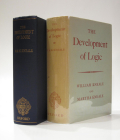 Since logic is not simply valid argument but the reflection upon principles of validity, it will arise naturally only when there is already a considerable body of inferential or argumentative material to hand. Not every type of discourse provokes logical inquiry. Pure story-telling or literary discourse, for example, does not provide a sufficient amount of argumentative material. It is those types of discourse or inquiry in which proof is sought or demanded that naturally give rise to logical investigation; for to prove a proposition is to infer it validly from true premisses. The conditions of proof are two: true premisses, or starting-points, and valid arguments.
(William Kneale and Martha Kneale, The Development of Logic [Oxford: Clarendon Press, 1962; paperback ed., 1984], 1 [italics in original])
Note from KBJ: This is a thin conception of proof. Most contemporary logicians would call a valid argument with true premises a sound argument. A proof is a sound argument all of whose premises are known. In other words, proof is an epistemological concept.
-
Subscribe
Subscribed
Have a WordPress.com account? Log in now.

