From the Inside (1978). Forty years gone.
-
-
Here is a great story about Alice Cooper.
Music
–––––––
-
 Butler, Mill, Sidgwick, Moore, and others have distinguished, in various terms, between moral theories as criteria or standards of rightness and moral theories as decision procedures. Criteria of rightness supply the property or properties in virtue of which objects of moral assessment, for instance actions, are right or justified. A decision procedure states how agents should deliberate, reason, and make moral decisions. As such, a decision procedure also has implications for the content of a moral agent's motives. Because utilitarianism claims that everyone's happiness matters and that total happiness should be maximized, a utilitarian decision procedure would require, among other things, that agents be disinterestedly benevolent at all times. But utilitarianism can be a standard of rightness without being a decision procedure. Sidgwick makes this point in the following way:
Finally, the doctrine that Universal Happiness is the ultimate standard must not be understood to imply that Universal Benevolence is the only right or always the best motive of action. For, as we have observed, it is not necessary that the end which gives the criterion of rightness should always be the end at which we consciously aim: and if experience shows that the general happiness will be more satisfactorily obtained if men frequently act from other motives than pure universal philanthropy, it is obvious that these other motives are reasonably to be preferred on Utilitarian principles.
Sidgwick's point is that because of facts such as our limited abilities to benefit effectively people whom we do not know and the special importance of personal projects and relationships, utility will not be maximized by universal benevolence. Rather, the standard of utilitarianism will be better satisfied if we have special concern for ourselves and those near at hand. The practical problems that prevent us from making generally reliable estimates of consequences and their value present similar reasons for believing that agents should deliberate not by attempting to maximize the value of the consequences of their actions but by appealing to rules that are in fact justifiable as contributing to human welfare. Many of these rules may be similar in content to the rules of conventional or commonsense morality. Indeed, this should not be surprising if, as many have suggested, the dictates of commonsense morality can be seen and explained as part of a system of norms whose observance promotes the good of everyone.
(David O. Brink, Moral Realism and the Foundations of Ethics, Cambridge Studies in Philosophy, ed. Sydney Shoemaker [Cambridge: Cambridge University Press, 1989], 256-7 [parenthetical references omitted])
-
Here is Kurt Schlichter's latest column.
-
To the editor:
President Trump wants to give the death penalty to drug dealers. ("Following Trump's lead, Sessions urges federal prosecutors to seek death penalty against major drug dealers," March 21)
Maybe if he was not so busy losing or firing people in the Justice Department and the FBI, some attorney or law enforcement officer would have told him that a constitutional amendment is needed to do that because the U.S. Supreme Court has ruled it is a violation of the 8th Amendment's prohibition of cruel and unusual punishment to impose the death penalty for any crime other than murder.
Drug dealing does not qualify.
Robert S. Henry, San Gabriel
Note from KBJ: Maybe President Trump is asking the Supreme Court to reconsider, Robert. Has that occurred to you? Why do you give the president the detriment of the doubt rather than the benefit of the doubt?
-

Another beautiful day in North Texas. I took this picture during my bike ride. Click to enlarge.
Roto Ergo Sum
–––––––
-
So much Fake News. Never been more voluminous or more inaccurate. But through it all, our country is doing great!
— Donald J. Trump (@realDonaldTrump) March 26, 2018
Presidential Tweet
–––––––
-
Here.
Ten Years Ago Today in This Blog
–––––––
-
Here.
Dilbert
–––––––
-
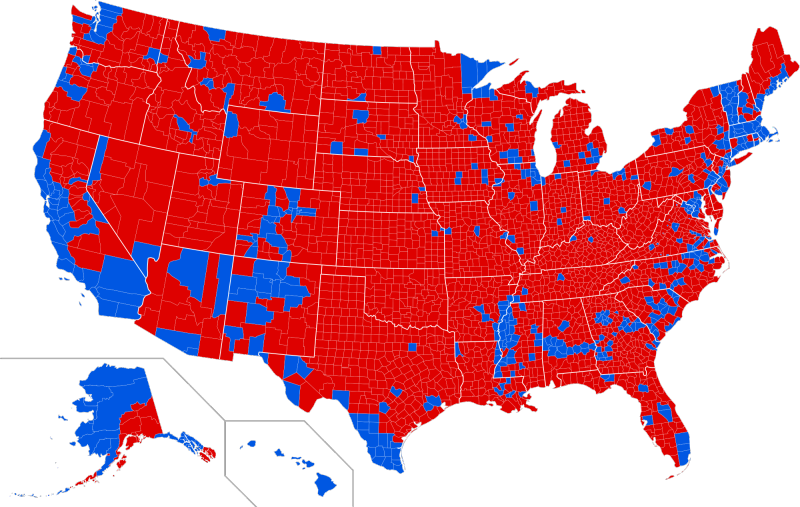
Click to enlarge.
Politics
–––––––

