Here are highlights from today's Gent-Wevelgem.
-
Cycling
–––––––
-
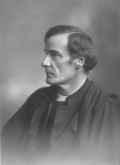 Man's moral status, his moral experience and its alleged a priori conditions, have provided foundations for a variety of moral arguments for theism, generally purporting to be sufficient in themselves and independent of teleological considerations. In other words, the being of God has been inferred directly from human morality, and from morality alone. One form of moral argument is a posteriori and causal. A. R. Wallace, Lord Balfour, and others, have submitted that, inasmuch as natural selection cannot account for the origin of our higher moral sentiments, resort to a supernatural cause is necessary. Natural selection can only explain the emergence and persistence of such moral conduct and principles as possess survival-value for individuals or societies, between which the struggle for existence obtains; and survival-value does not pertain to the higher morality. But it would seem that naturalism can itself supply an explanation, rendering appeal to a divine cause unnecessary. Just as a bodily organ, developed in response to environment so as to fulfil a certain function, often proves, when acquired, to be capable of performing other functions also, and becomes a starting-point for developements in new directions, so may a mental functioning, once sufficiently developed to possess utility in the struggle for existence, be able of itself, or without further evocation from the environment, to develope to higher levels which, from Nature's point of view, are superfluous. The human mind, once having attained in the course of evolution to ideation, social intercourse, and language, is in a position to develope spontaneously, no longer controlled by mechanical selection (which is but rejection) but by its own interests and intrinsic potencies. From intelligence and emotional sensibility that are biologically useful it may proceed to disinterested science, to pure mathematics having no relation to the needs of life, to art, morality, and religion, no one of which products, rather than another, requires the intervention of a Deus ex machina to cause its emergence.
(F. R. Tennant, Philosophical Theology, vol. 2, The World, the Soul, and God [Cambridge: Cambridge University Press, 1930], 93-4)
-
So many times I’ve sat down to write this letter, and from morning to night, from day to day, we have one breaking news story after another. This president and his administration have kept all of us in such a mind-blowing, head-spinning state that we don’t know what’s up or what’s down. I start a letter and the topic changes so fast, I can’t settle on one thing because one is more important than the next.
And Donald Trump keeps changing the subject as fast as he can, throwing in all kinds of distractions and misinformation so we are totally baffled.
I believe this is intentional. You know, a smoke-and-mirrors game they’re playing, and we won’t be the wiser.
I know Mr. Trump was to be a disrupter and would drain the swamp. His supporters couldn’t wait to “make America great again.” Anyone who calls what he’s doing “great” just seems to me so misguided and delusional. If Mr. Trump were appointing Cabinet members who were improving their departments, it’d be great. Instead they’re tearing them down at a bone-chilling pace while spending crazy amounts of our money on plane trips and doors—and getting away with it.
We couldn’t make all these many things up if we used the wildest of our imaginations. This totally controlled Republican government has absolutely no courage and sadly has turned its back on we Americans. How can these officials stay silent and let our beautiful country be torn down like this? I believe the answer, to start, is to vote them out of office and get checks and balances back to right this ship. But I’m afraid it’ll take some a long time to realize what’s really happening, until they actually feel the hurt.
In the meantime, so much is being destroyed and we are all in a world of hurt. I know I’m scared out of my mind and worry every day.
God help us all. Donald Trump and his frightening administration sure won’t.
SUSAN PRICE
Indiana Township
Note from KBJ: Now you know how many of us felt during the eight years of Barack Hussein Obama, Susan. Suck it up.
-
Because of the $700 & $716 Billion Dollars gotten to rebuild our Military, many jobs are created and our Military is again rich. Building a great Border Wall, with drugs (poison) and enemy combatants pouring into our Country, is all about National Defense. Build WALL through M!
— Donald J. Trump (@realDonaldTrump) March 25, 2018
Presidential Tweet
–––––––
-
Brother to Brother (1978).
-
Here.
Ten Years Ago Today in This Blog
–––––––
-
Here.
Dilbert
–––––––
-
Are we living under the worst American president ever?
It leaves me wondering that if it were Feb. 14, 1929, President Donald Trump would call Al Capone to congratulate him on a brilliant business move.
Jay Davis, Shoreline
-
As a matter of National Security I've signed the Omnibus Spending Bill. I say to Congress: I will NEVER sign another bill like this again. To prevent this omnibus situation from ever happening again, I'm calling on Congress to give me a line-item veto for all govt spending bills! https://t.co/kYwMk5AE5k
— Donald J. Trump (@realDonaldTrump) March 23, 2018
Presidential Tweet
–––––––
-
 There is of course much of value to be learned from [Robert] Nozick's ingenious and diverting pages, but there are also many quite different criticisms to be made of its foundations apart from the one which I have urged. But since other critics have been busy with many such criticisms I will here mention only one. Even if a social philosophy can draw its morality as Nozick assumes only from a single source; even if that source is individual rights, so that the only moral wrongdoing consists in wrongs done to individuals that violate their rights, and even if the foundation for such rights is respect for the separateness of persons, why should rights be limited as they are by Nozick to what [Jeremy] Bentham called the negative services of others, that is to abstention from such things as murder, assault, theft and breach of contract? Why should there not be included a basic right to the positive service of the relief of great needs or suffering or the provision of basic education and skills when the cost of these is small compared with both the need to be met and with the financial resources of those taxed to provide them? Why should property rights, to be morally legitimate, have an absolute, permanent, exclusive, inheritable and unmodifiable character which leaves no room for this? Nozick is I think in particular called upon to answer this question because he is clear that though rights for him constitute the only source of constraint on action, they are not ends to be maximised; the obligations they impose are, as Nozick insists, "side constraints," so the rights form a protective bastion enabling an individual to achieve his own ends in a life he shapes himself; and that, Nozick thinks, is the individual's way of giving meaning to life.
But it is of course an ancient insight that for a meaningful life not only the protection of freedom from deliberate restriction but opportunities and resources for its exercise are needed. Except for a few privileged and lucky persons, the ability to shape life for oneself and lead a meaningful life is something to be constructed by positive marshalling of social and economic resources. It is not something automatically guaranteed by a structure of negative rights. Nothing is more likely to bring freedom into contempt and so endanger it than failure to support those who lack, through no fault of their own, the material and social conditions and opportunities which are needed if a man's freedom is to contribute to his welfare.
(H. L. A. Hart, "Between Utility and Rights," Columbia Law Review 79 [June 1979]: 828-46, at 835-6 [footnotes omitted])

