
Skip to content

Keith Burgess-Jackson, J.D., Ph.D.

  • Michael Stokes Paulsen and Luke PaulsenAll along we insisted that the book be simple but smart. There is a way, we believe, to write simply and still discuss the Constitution in a sophisticated way—to be succinct and accurate, not simplistic and distorted. Unfortunately, most popular treatments of the Constitution—in school textbooks, website sources, and the mass media—fail badly on this score. They are riddled with errors, myths, and distortions small and large. They invariably teach that the Supreme Court, in Marbury v. Madison, invented the idea of "judicial review" (false); that the interpretation of the Constitution is exclusively for the courts (false); that the Supreme Court always has the last word on the meaning of the Constitution (false); that the meaning of the Constitution's words evolves fluidly over time (false); and, perhaps most outrageously of all, that the history of the Constitution has been one of steady progression toward justice (false). Each of these propositions—widely accepted by most Americans, even those who claim some familiarity with the Constitution—is seriously flawed. Some are half-truths; some are quarter-truths; some are just plain wrong.

    (Michael Stokes Paulsen and Luke Paulsen, The Constitution: An Introduction [New York: Basic Books, 2015], xiv [italics in original])
    Michael Stokes Paulsen and Luke Paulsen on Constitutional Errors, Myths, and Distortions

    –––––––

    Mar 14
  • How far my Detroit Tigers and Texas Rangers have fallen!

    Baseball

    –––––––

    Mar 14
  • Here.

    Ten Years Ago Today in This Blog

    –––––––

    Mar 14
  • Here.

    Dilbert

    –––––––

    Mar 14
  • Here is Roger Kimball's latest column. Thank God (and Donald Trump) that Crooked Hillary Clinton didn't become president.

    “Accomplishments That Qualify Her”

    –––––––

    Mar 14
  • To the editor:

    Since President Trump has a well-earned 66% disapproval rating in California, most of us aren't very welcoming of him during his brief visit to California.

    Trump has bent over backward to give the benefit of the doubt to neo-Nazis and people accused of spousal abuse and sexual harassment. He has suggested that Democrats who don't clap for him are treasonous. He honors Russia and dishonors the FBI. He looks favorably on deceit, hypocrisy, conflict of interest and nepotism. He lies.

    Welcoming Trump to California is tantamount to welcoming a despot.

    Bunny Landis, Oceanside

    Trump Derangement Syndrome, from Today’s Los Angeles Times

    –––––––

    Mar 14
  • No mention of the fact that we have campus carry.

    Academia

    –––––––

    Mar 14
  • We cannot keep a blind eye to the rampant unfair trade practices against our Country!

    — Donald J. Trump (@realDonaldTrump) March 14, 2018

    https://platform.twitter.com/widgets.js

    Presidential Tweet

    –––––––

    Mar 14
  • Oceanliner (1980).

    Passport, “Departure” (1980)

    –––––––

    Mar 13
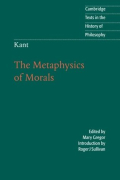
  • 72066A sketch of Immanuel Kant's life takes very little space. Except for a conflict with the royal censor over his writings on religion, he led the quiet life of a faculty member within a small eighteenth-century European university. He was born in Königsberg, East Prussia, 22 April 1724, and he died there 12 February 1804, never having left the Königsberg area, where he taught first as a private tutor and then, for some twenty-five years, served as Professor of Logic and Metaphysics. So influential have been his publications, however, that, like Plato before him, no one after him could do philosophy without taking him into account. Even today his remains the premier moral theory. Although his political philosophy has not had the same impact as his ethical doctrines, it did anticipate the classical liberalism underlying republican forms of government today.

    (Roger J. Sullivan, "Introduction," in The Metaphysics of Morals, by Immanuel Kant, trans. and ed. Mary Gregor, Cambridge Texts in the History of Philosophy, ed. Karl Ameriks and Desmond M. Clarke [Cambridge: Cambridge University Press, 1996], vii-xxvi, at vii)

    Roger J. Sullivan on Immanuel Kant (1724-1804)

    –––––––

    Mar 13
Previous Page Next Page

Blog at WordPress.com.

  • Subscribe Subscribed
    Keith Burgess-Jackson, J.D., Ph.D.

    Have a WordPress.com account? Log in now.

  • Keith Burgess-Jackson, J.D., Ph.D.
    View site in Reader
    Manage subscriptionsSign upLog in
    Report this content
    Collapse this bar