Here.
-
Dilbert
–––––––
-
 [A]nyone who applies to another a standard of which he would complain if it were applied to himself has no moral grounds for his complaint. He is being both immoral and illogical. It follows, then, that the Golden Rule formulates a fundamental requirement of justice, that everyone's conduct must be judged by the same standards, and that no one has, in general, any warranted claim to a special or privileged position. It is therefore at the basis of the Principle of Justice, that what is right or wrong for one person must be right or wrong for any similar person in similar circumstances. Stated differently but equivalently: What is right for one person cannot be wrong for another, unless there is some relevant difference in their natures or circumstances.
(Marcus G. Singer, "The Golden Rule," Philosophy 38 [October 1963]: 293-314, at 302)
-

The Battle of the Little Bighorn was fought 139 years ago today. The image (click to enlarge) depicts Yellow Nose counting coup during the battle.
History
–––––––
-
To the Editor:
Re “Calls Rise to Remove Symbols of Confederacy” (front page, June 24):
I can’t help but wonder how tickled the National Rifle Association must be that after another mass shooting in America what we’re talking about is removing a flag.
JOHN CARBONE
Louisville, Ky.
Note from KBJ: Hoplophobes never sleep.
From Today’s New York Times
–––––––
-
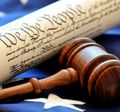 Chief Justice John Roberts Jr of the Supreme Court of the United States has saved ObamaCare again. Writing for five of his eight colleagues (all but Associate Justices Antonin Scalia, Clarence Thomas, and Samuel Alito), he ruled that the statute can be construed in such a way as to allow subsidies for individuals in the federal health-care exchange and not merely in state health-care exchanges. This didn't stop him from criticizing Congress, however. Here are two juicy paragraphs from his opinion:
The Affordable Care Act contains more than a few examples of inartful drafting. (To cite just one, the Act creates three separate Section 1563s. See 124 Stat. 270, 911, 912.) Several features of the Act’s passage contributed to that unfortunate reality. Congress wrote key parts of the Act behind closed doors, rather than through “the traditional legislative process.” Cannan, A Legislative History of the Affordable Care Act: How Legislative Procedure Shapes Legislative History, 105 L. Lib. J. 131, 163 (2013). And Congress passed much of the Act using a complicated budgetary procedure known as “reconciliation,” which limited opportunities for debate and amendment, and bypassed the Senate’s normal 60-vote filibuster requirement. Id., at 159–167. As a result, the Act does not reflect the type of care and deliberation that one might expect of such significant legislation. Cf. Frankfurter, Some Reflections on the Reading of Statutes, 47 Colum. L. Rev. 527, 545 (1947) (describing a cartoon “in which a senator tells his colleagues ‘I admit this new bill is too complicated to understand. We’ll just have to pass it to find out what it means.’”).
Anyway, we “must do our best, bearing in mind the fundamental canon of statutory construction that the words of a statute must be read in their context and with a view to their place in the overall statutory scheme.” Utility Air Regulatory Group, 573 U. S., at ___ (slip op., at 15) (internal quotation marks omitted). After reading Section 36B along with other related provisions in the Act, we cannot conclude that the phrase “an Exchange established by the State under [Section 18031]” is unambiguous.
I don't mind the ruling, to be quite honest. Had it gone the other way, it would have been satisfying legally but unsatisfying politically. Republicans would have been blamed for the inevitable unraveling of ObamaCare, for they brought the lawsuits that would have led to that result. As things now stand, Republicans have nothing whatsoever to do with the statute. Not a single Republican voted for it. When it unravels, as it surely will, and when Americans pay significantly higher costs for their health care, and when health care begins to be rationed, and when death panels determine who lives and who dies, Americans will blame the Democrats in general and Barack Obama in particular. Stay tuned.
Addendum: Justice Scalia, in dissent, did not mince words:
Today’s opinion changes the usual rules of statutory interpretation for the sake of the Affordable Care Act. That, alas, is not a novelty. In National Federation of Independent Business v. Sebelius, 567 U. S. ___, this Court revised major components of the statute in order to save them from unconstitutionality. The Act that Congress passed provides that every individual “shall” maintain insurance or else pay a “penalty.” 26 U. S. C. §5000A. This Court, however, saw that the Commerce Clause does not authorize a federal mandate to buy health insurance. So it rewrote the mandate-cum-penalty as a tax. 567 U. S., at ___–___ (principal opinion) (slip op., at 15–45). The Act that Congress passed also requires every State to accept an expansion of its Medicaid program, or else risk losing all Medicaid funding. 42 U. S. C. §1396c. This Court, however, saw that the Spending Clause does not authorize this coercive condition. So it rewrote the law to withhold only the incremental funds associated with the Medicaid expansion. 567 U. S., at ___–___ (principal opinion) (slip op., at 45–58). Having transformed two major parts of the law, the Court today has turned its attention to a third. The Act that Congress passed makes tax credits available only on an “Exchange established by the State.” This Court, however, concludes that this limitation would prevent the rest of the Act from working as well as hoped. So it rewrites the law to make tax credits available everywhere. We should start calling this law SCOTUScare.
Perhaps the Patient Protection and Affordable Care Act will attain the enduring status of the Social Security Act or the Taft-Hartley Act; perhaps not. But this Court’s two decisions on the Act will surely be remembered through the years. The somersaults of statutory interpretation they have performed (“penalty” means tax, “further [Medicaid] payments to the State” means only incremental Medicaid payments to the State, “established by the State” means not established by the State) will be cited by litigants endlessly, to the confusion of honest jurisprudence. And the cases will publish forever the discouraging truth that the Supreme Court of the United States favors some laws over others, and is prepared to do whatever it takes to uphold and assist its favorites.
Ouch.
Addendum 2: What this case shows is that Chief Justice Roberts defers to the legislative branch of government. This deferential attitude is legal conservatism, which is different from political conservatism. Roberts presumes not only that statutes are constitutional (we saw that in Sebelius), but that they are to be construed in such a way as to give effect to the most likely intentions of legislators. Presumptions, by their nature, are rebuttable, and sometimes, in Roberts's view, they are rebutted, but not here. Roberts seems to hold the view that if Congress and the president fuck things up, they should have to pay the price for it, both electorally and in terms of their reputations. As long as a statute doesn't blatantly violate the Constitution, it will be upheld; and as long as its main purpose can be ascertained, it will be construed so as to achieve that purpose. In this way, the American people get the legislation they deserve.
Addendum 3: Having said my piece, I checked out some of the commentary on the case. This is a pretty good analysis.
Addendum 4: ObamaCare is wildly unpopular, and I expect it to become more so as its provisions take effect. It's a big day for Republicans.
Law
–––––––
-

This is the final image from our vacation to Las Vegas this past January. It shows the hiking trail in Red Rock Canyon. Click to enlarge. I hope you enjoyed the pictures!
Las Vegas #30
–––––––
-
Here.
Ten Years Ago Today in This Blog
–––––––
-
Here.
Dilbert
–––––––
-
 What would a genuinely leftist movement against oppression and poverty look like? First of all, it would be a movement of the oppressed, a mobilization of men and women, previously passive, inarticulate, and frightened, now able to speak for themselves and defend their human rights. Second, its aim would be the liberation or, better, the self-emancipation of those same people. And its driving force would be a vision, no doubt partially shaped by the local culture, of a new society whose members, men and women alike, would be more free and more equal and whose government would be responsive and accountable. That’s not an unusual description of left aspiration. So it’s a mystery that anyone anywhere can seriously believe that any Islamist group belongs to the global, or any other, left.
How should the left respond to those Islamist groups—assuming, as I believe, that a critical response is necessary? I am not going to consider military responses here. There is an international brigade of Islamist zealots fighting in Iraq and Syria, but there is no chance of recruiting an international brigade of leftist fighters, so there is no point thinking about where we might send them. Leftists will have to support (though many won’t) military efforts specifically aimed at stopping the massacre of infidels and heretics. After that, I am more inclined to consider a policy focused on the containment of Islamism rather than a war (or a series of wars) to destroy it. This is a fever that will have to burn itself out. But there is a deep difficulty with this view: many people will suffer in the burning, and leftists ignore that suffering at our moral peril. How to help those who are targeted by Islamist forces is a question that we will have to address again and again.
(Michael Walzer, "Islamism and the Left," Dissent 62 [winter 2015]: 107-17, at 115 [italics in original])
-

Baseball
–––––––

