Skip to content

Keith Burgess-Jackson, J.D., Ph.D.

  • To the Editor:

    Re “Governor Joins the Call to Take Down Rebel Flag” (front page, June 23):

    An earlier public debate surrounding the Confederate flag in South Carolina is a vivid memory from my Charleston childhood. As your article notes, in 2000 the flag was moved from the State House’s dome to its current home on the State House grounds.

    This poorly conceived solution is a fitting metaphor for the way the country confronts racism (and gun violence). We episodically attack superficial symptoms while ignoring root causes.

    For South Carolina to overcome this cycle of harmful inaction, Gov. Nikki R. Haley must do more than take safe stances on debates that should have been resolved 15 (or, let’s be honest, 150) years ago. The governor has the authority to introduce genuine change. She must take stronger stances.

    Governor Haley, do you want less gun violence and fewer hate crimes? Then increase gun control—significantly—and introduce hate crime laws, now. You wanted to lead South Carolina. Well, lead South Carolina.

    J. P. GONZALES

    Brooklyn

    From Today’s New York Times

    –––––––

    Jun 24
  • IMG_5274

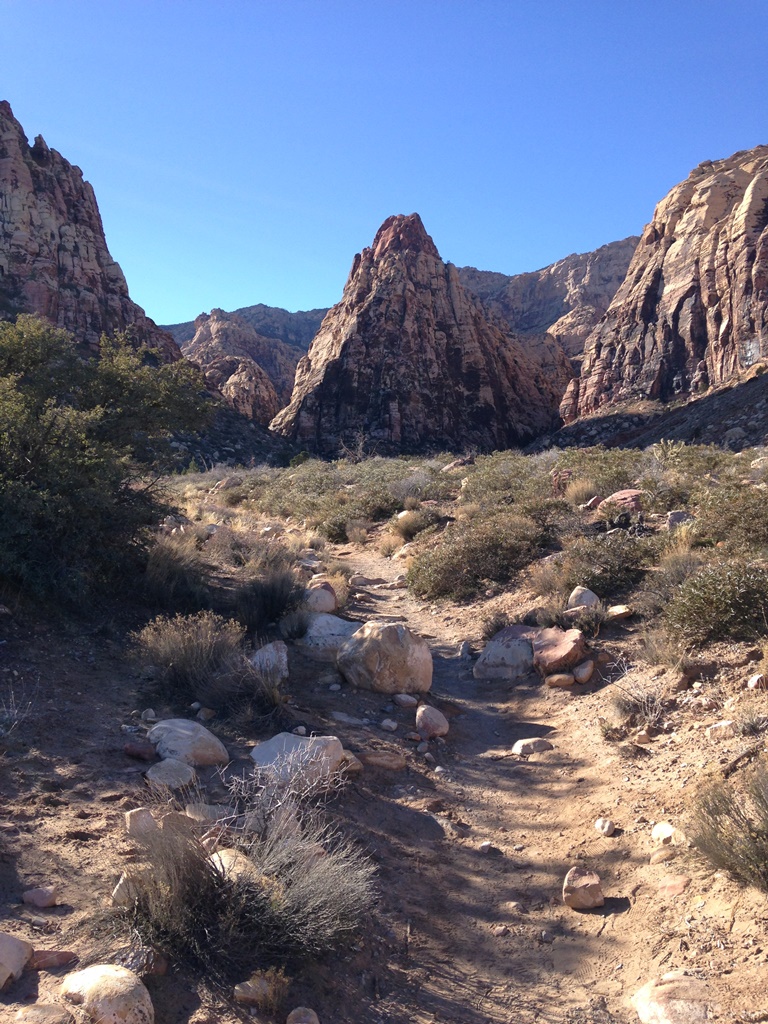
    This is the Pine Creek Canyon Trail in Red Rock Canyon National Conservation Area, near Las Vegas. Katherine and I did a short hike after several hours of driving. As you can see, it was a beautiful day. Click to enlarge.

    Las Vegas #29

    –––––––

    Jun 23
  • Here.

    Ten Years Ago Today in This Blog

    –––––––

    Jun 23
  • Here.

    Dilbert

    –––––––

    Jun 23
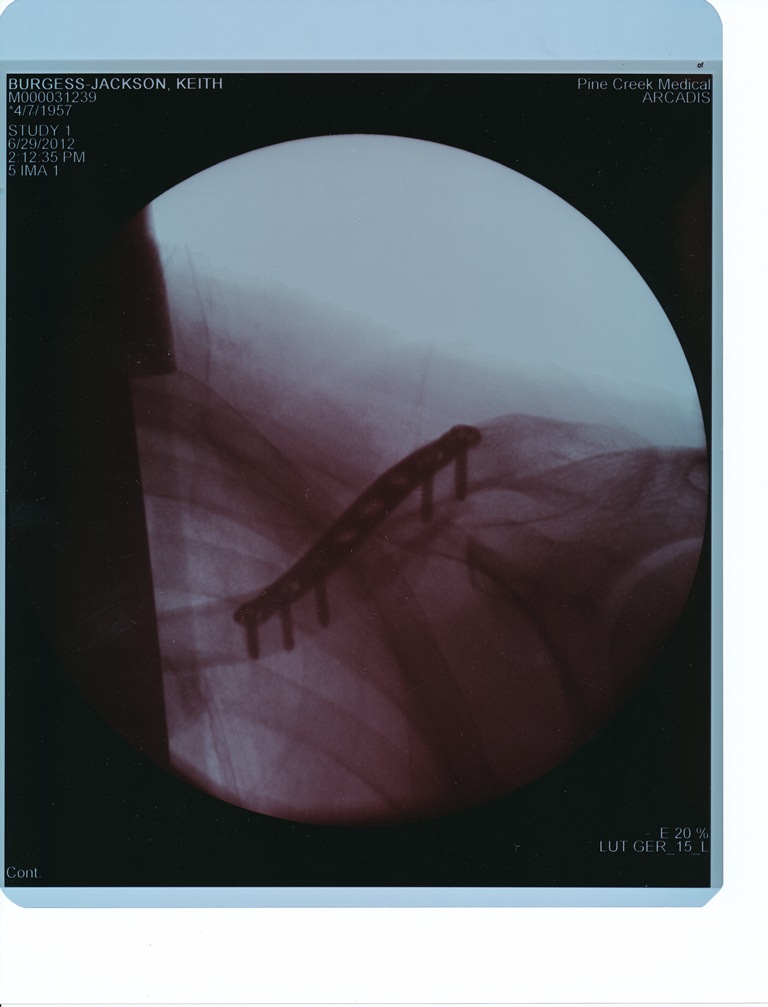
  • 20120629, Repaired Collarbone

    Three years ago today, on 23 June 2012, I broke my left collarbone in a bike accident at the Cow Creek Country Classic in Waxahachie, Texas. The collarbone was in so many pieces that the surgeon had to implant a titanium plate with five screws to hold it together. (See the X-ray image above; click to enlarge.) Surgery was on 29 June, six days after the accident. I was on a stationary bike 11 days later and got back on the road 24 days after surgery. I did a bike rally (in Cleburne) 29 days after surgery, against doctor's orders. Fourteen months after the accident, I broke the collarbone again in another bike accident, this time adding a broken rib and a broken vertebra to my growing list of broken bones. (I broke my left elbow in 1991.) The second accident, in 2013, didn't require surgery, though the bone was broken in at least two places. It has healed just fine, though one of the screws is conspicuous. Since the first accident three years ago, I have pedaled 11,209.8 miles, which is an average of 10.23 miles per day and 71.6 miles per week. I love riding.

    Roto Ergo Sum

    –––––––

    Jun 23
  • To the Editor:

    It was with some dismay that I read “Aid to Women, or Bottom Line? Advocates Split on Libido Pill” (front page, June 14).

    The National Association of Clinical Nurse Specialists supports approval of flibanserin by the Food and Drug Administration because it has been rigorously tested and because there is a dearth of medication to help women suffering from sexual dysfunction.

    These are the same reasons the F.D.A. advisory committee recommended approval.

    While it is true that flibanserin has some possible side effects, this is true for most F.D.A.-approved drugs on the market.

    Women need to be educated about those side effects and make their own decisions, in consultation with their health care providers, about whether to use flibanserin. But they cannot do that if they don’t even have the option.

    PEGGY BARKSDALE

    Indianapolis

    The writer is president of the National Association of Clinical Nurse Specialists.

    From Today’s New York Times

    –––––––

    Jun 23
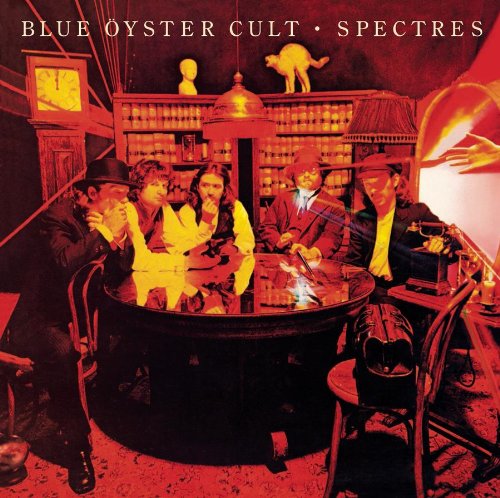
  • Blue Oyster Cult, Spectres (1977)

    Now Playing

    –––––––

    Jun 23
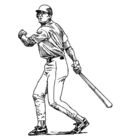
  • BaseballSeven-Inning Felix (10-4) didn't make it through seven innings yesterday. He threw 112 pitches in six and two-thirds innings. This tired him out so much that he bailed on his teammates and took a shower. His team lost. Seven-Inning Felix is on track to win 21.8 games this season, but he usually fades as the season goes on. Look for him to fall short of 20 victories (again) and for his team, the Seattle Mariners, to fail to make the playoffs (again). He has never won 20 games and he has never appeared in the playoffs. This is his 11th Major League season.

    Baseball

    –––––––

    Jun 23
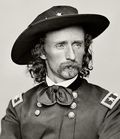
  • George Armstrong Custer 44On the morning of June 22 [1876], Terry delivered written instructions to guide Custer's operation, which we must quote in full:

    The Brigadier General commanding directs that, as soon as your regiment can be made ready for the march, you will proceed up the Rosebud in pursuit of the Indians whose trail was discovered by Major Reno a few days since. It is, of course, impossible to give you any definite instructions in regard to this movement, and were it not impossible to do so the Department Commander places too much confidence in your zeal, energy, and ability to wish to impose on you precise orders which might hamper your action when nearly in contact with the enemy. He will, however, indicate to you his own views of what your action should be, and he desires that you should conform to them unless you shall see sufficient reasons for departing from them. He thinks that you should proceed up the Rosebud until you ascertain definitely the direction in which the trail above spoken of leads. Should it be found (as it appears almost certain that it will be found) to turn toward the Little Horn, he thinks that you should still proceed southward, perhaps as far as the headwaters of the Tongue, and then turn toward the Little Horn, feeling constantly, however, for your left, so as to preclude the possibility of the escape of the Indians to the south or southeast by passing your left flank. The column of Colonel Gibbon is now in motion for the mouth of the Big Horn. As soon as it reaches that point it will cross the Yellowstone and move up at least as far as the forks of the Big and Little Horns. Of course, its future movements must be controlled by circumstances as they arise, but it is hoped that the Indians, if upon the Little Horn, may be so nearly inclosed by the two columns that their escape will be impossible.

    The Department Commander desires that on your way up the Rosebud you should thoroughly examine the upper part of Tullock's Creek, and that you should endeavor to send a scout through to Colonel Gibbon's column, with information of the results of your examination. The lower part of this creek will be examined by a detachment from Colonel Gibbon's command. The supply steamer will be pushed up the Big Horn as far as the forks of the river if found to be navigable for that distance, and the Department Commander, who will accompany the column of Colonel Gibbon, desires you to report to him there not later than the expiration of the time for which your troops are rationed, unless in the meantime you receive further orders.

    Before proceeding further we must pause to excavate these orders from an incredible overlay of the detritus of controversy. A century of partisan haggling over their disobeyance has concealed their useful signal in a furious noise, which is all the more deplorable since the issue belongs to the realm of military legalistics, not to the mechanics of battle. The dogma that any violation of orders automatically spells defeat is transparent nonsense. When perceptive disobedience snatches victory from defeat, who complains? It is thus not obedience or disobedience, per se, that determines the outcome of battle, but the appropriateness of the actions taken in the context of the conflict. To be sure, the violation had better be appropriate, or the violator will reap a justly bitter harvest.

    In this particular case, the great debate has even lacked an arguable issue. Terry's instructions contain one tiny word, usually ignored, that made it impossible for Custer's actions to have constituted a violation. This key work [sic] is italicized in the following passage: "you should conform to them unless you shall see sufficient reason [sic] for departing from them." Terry thus explicitly authorized Custer to act as the sole judge—not Terry nor any other officer, not some barracks lawyer nor a court-martial, not even history. Only Custer. Period. One may quarrel with Custer's judgement, but not his authority to judge. Custer's obedience is therefore neither debatable, nor relevant.

    (John S. Gray, Centennial Campaign: The Sioux War of 1876, Volume No. 8 in the Source Custeriana Series [Ft. Collins, CO: The Old Army Press, 1976], 147-8 [italics in original; parenthetical reference omitted])
    John S. Gray on Terry’s Orders to Custer

    –––––––

    Jun 22
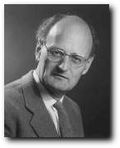
  • R. M. Hare 2Twenty years ago yesterday, I received this letter from the British philosopher R. M. Hare, with whom I had been corresponding. Hare died in 2002 at the age of 82. I had told him in an earlier letter that I was thinking of writing a book about him. I haven't written it yet, and may never do so, but I've been compiling an annotated bibliography for several years.

    Correspondence

    –––––––

    Jun 22
Previous Page Next Page

Blog at WordPress.com.

  • Subscribe Subscribed
    Keith Burgess-Jackson, J.D., Ph.D.

    Have a WordPress.com account? Log in now.

  • Keith Burgess-Jackson, J.D., Ph.D.
    View site in Reader
    Manage subscriptionsSign upLog in
    Report this content
    Collapse this bar